Blog
Ireland at the Helm: Practical Steps to be Taking Now for the EU Presidency
Learn more
In this article Claire Scannell, Director of the Managing Partner's office, Matheson LLP, discusses Ireland’s upcoming EU Presidency. She explores its influence on policy, key priorities for business and why directors should engage early to navigate regulatory and strategic change.
Every thirteen and a half years, Ireland’s turn comes around to chair the Council of the EU. From July to December 2026, we will hold the Presidency for the eighth time. For directors operating in Ireland, it is a strategically significant time, and one that warrants closer attention than it sometimes receives.
The Presidency of the Council is, at its core, the role of an honest broker. Ireland will chair Council meetings, manage the legislative agenda, and work to build consensus across 27 member states on some of the most consequential issues facing the EU. While the role does not carry decision making power, it brings genuine influence through timing, framing, and particularly around the ability to shape what is prioritised, and what is not. It is a role that demands both political judgement and sustained multilateral cooperation.
While not yet finalised, Ireland’s Presidency programme is expected to be anchored around three headline priorities: security and defence, competitiveness, and values. Each translates directly into board level considerations that should now be incorporated into board agendas for evaluation.
Security and defence is not an abstract geopolitical agenda. It is about resilience: exposure to hybrid threats, cyber attacks, vulnerabilities in critical infrastructure, energy dependence, and supply chain disruption. These are governance issues as much as operational ones, and the Presidency will sharpen focus on how the EU responds to them collectively. Boards should expect continued regulatory and policy activity in this space. Arguably, the more important point here is not whether these risks are understood but whether they are clearly owned at board level.
Competitiveness will be another significant strand. The Presidency will press for a Single Market that functions more effectively in practice. The figures often cited in this context from the Dhragi Report are stark: internal EU barriers are estimated to be equivalent up to a 65% tariff on goods and a 100% tariff on services. The opportunity is considerable. Ireland’s approach is not deregulation but better regulation - clearer, more proportionate, and more predictable. For regulated industries in particular, legal certainty is not a constraint on growth; it is the condition that allows crucial decisions such as those around investment to be made with confidence.
The third priority, values, can sound less tangible, but it should not be overlooked. Ireland will argue that democracy and the rule of law are not in tension with competitiveness but that they underpin it. For directors, this matters. Strong institutions, predictable legal systems, and respect for the rule of law are core components of Ireland’s attractiveness as a place to invest and do business. Defending those foundations at EU level is not a symbolic exercise. It is about maintaining the operating environment on which businesses rely.
One of the most consequential tasks that will fall to Ireland will be chairing and concluding, the negotiations on the next EU Multiannual Financial Framework, covering the years 2028 to 2034. The budget under discussion is close to €2 trillion. It will shape EU spending priorities for the better part of a decade spanning agriculture and regional development to the EU’s priorities areas of focus including defence, climate, innovation, and enlargement. Agreement requires unanimity across all 27 member states.
Ireland brings experience to this process. During our 2013 Presidency, we negotiated a €960 billion EU budget against the backdrop of acute political and economic pressure. It just so happens that this role falls to Ireland again during this Presidency. The skills of patience, credibility, and careful coalition building which will be required to execute this task are ones we have demonstrated before.
For directors, there are a number of areas that warrant attention in the context of the Presidency:
Ireland’s full Presidency programme will be published in June 2026. More than 270 events will take place across the country. Dublin will host 47 European leaders for the European Political Community summit as well as a flagship European level AI Summit, focused on the governance, deployment and commercial implications of artificial intelligence, an area where EU policy is now moving rapidly from principle to practice.
For Ireland, the Presidency is an opportunity to demonstrate leadership and shape the European agenda. For directors, it is a moment to engage early and intelligently. Industry bodies and representative organisations will be active throughout the Presidency. Staying close to the issues being worked through and understanding when and where engagement matters is how boards can position their organisations for the policy and regulatory environment that will follow.
This article is the view of the author(s) and does not necessarily reflect IoD Ireland’s policy or position.

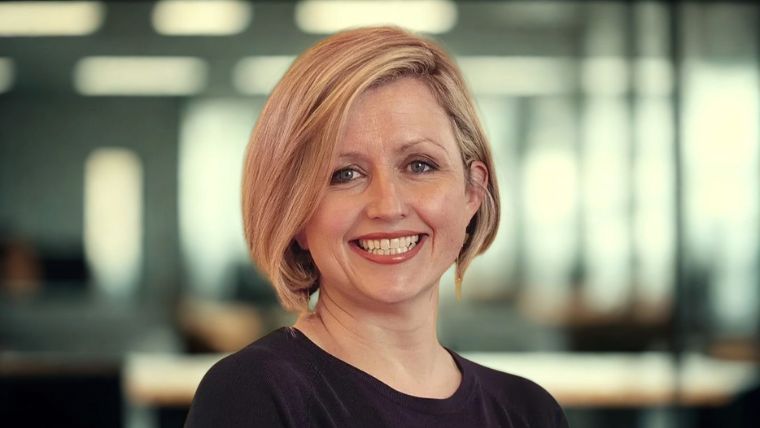
Claire Scannell is a qualified solicitor with experience across private practice and in-house leadership. She spent eight years as a Professional Support Lawyer in Matheson’s Financial Institutions Group, where she was responsible for legal knowledge management, training and precedent development, and supported the firm’s work for financial services clients across regulatory, transactional and advisory matters.
Prior to joining Matheson, Claire served as General Counsel of a multinational reinsurance group with its European headquarters in Dublin, where she led the organisation’s legal affairs across multiple jurisdictions, advising on complex cross-border regulatory and contractual frameworks. Claire is a regular lecturer at the Law Society of Ireland on the Diploma in Finance Law.
Join our collective and become empowered, informed, and supported by a network of fellow pioneering directors.