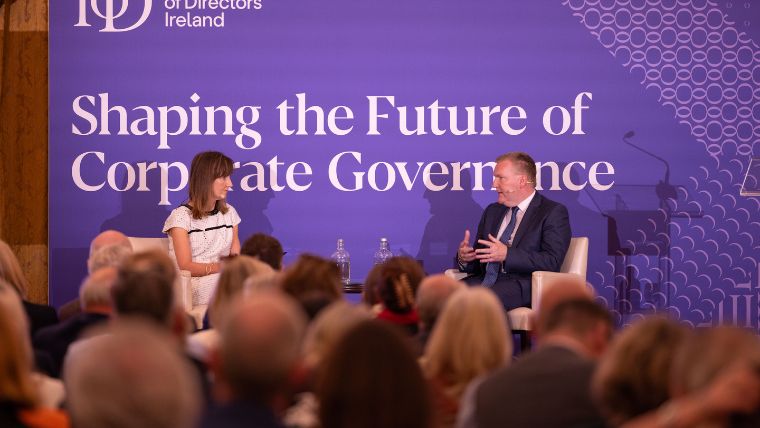
In this article Andrea Pappin, Founder, Common Good, discusses how boards can capitalise on Ireland’s EU Presidency by understanding its role and acting early to align, engage and influence effectively together.
Less than 100 days from now, Ireland takes the chair of the Council of the European Union. There is no shortage of commentary about what a significant moment this is, however for board members and senior leaders, the more pressing question is practical. How do you generate real traction from this, especially when so much detail will not be released until June out of respect for the current Cypriot Presidency?
The answer comes down to three things: understanding what the Presidency actually means, knowing why this one is different, and taking some concrete steps now rather than waiting for June.
What the Presidency actually means
Ireland's role is that of 'honest broker'. We are not there to bully our priorities onto the agenda. We are there to find compromise, keep the machine moving and get the business of Europe done. That said, there is real influence available in how issues are sequenced on agendas, which events we prioritise, who gets a platform to speak. These subtleties add up.
The bulk of the work happens in Brussels, where our Ambassador to the EU and a significantly reinforced team will be managing the daily architecture of negotiations - think 3D chess, played at speed, with 27 players across thousands of legislative files simultaneously. In 2013, Ireland chaired 2,477 meetings, this time will be no different. In Ireland, we host hundreds of additional meetings to push the legislative agenda forward: Ministerial-level Informals, official working group meetings and industry-connected Associated Events, all supported by a Cultural Programme showcasing the country.
This is Ireland's eighth Presidency. We have never really had a bad one. That is either reassuring or terrifying, depending on how you look at it.
Why this one is different
EU2026 is Ireland's first second-half Presidency and our first without the UK at the table as a fellow Common Law member state. With August as the sacred political break, September pulling attention to New York for the UN General Assembly, and December disappearing into Christmas, the working window is four to five months, not six. With the same workload and a shorter runway, our civil service will be earning their salaries.
We also have a significantly fuller programme in Ireland compared to 2013 with more Ministerial events on the island. And then there’s the European Political Community which will see around 40 heads of state and government from across the entire European continent, not just EU members, descend on Dublin.That’s the kind of event that puts a country on the map.
We know the three headline themes for the Irish Presidency, Competitiveness, Security and Values, reflecting where Europe finds itself right now. Security will be a striking brief for a traditionally neutral Ireland to chair, with defence spending and border security dominating EU conversations. Competitiveness, with the Draghi Report fresh in the memory, is unfinished business for the EU, and Values and rule of law has never felt more relevant, nor more fragile.
What boards and senior leaders should be doing now
While the official programme does not land until June, there’s four things to be doing now.
First, understand where your organisation sits in relation to the three themes. You do not need the legislative detail to align yourself to these areas. The business of the EU is to talk, so find possible legislation relevant to your sector in these areas or pick a broader issue and get the conversation going. Helping the Government advance these themes makes our Presidency more coherent, and you are heard more when you are speaking their language.
Second, identify who in your organisation is tracking EU policy and whether they have the right relationships, in Government Departments, agencies and representative groups here and in Europe, to be part of the conversation. The Presidency creates genuine access, but that window does not stay open for long. With 22 Informals confirmed and an Associated Events programme incoming, now is the time to act. Official Government sponsorship opportunities are limited, but talk to your industry groups about what events are being planned - could you add to one, build your own breakfast briefing or sponsor a drinks reception? And be warned: hotel rooms in Ireland are filling up fast already.
Third, use the fact that people are coming to Ireland. Ministerial delegations from every EU member state will be passing through. Your representative groups and embassy contacts, both here and abroad, are your best source of information on travel plans ahead of official announcements to build a visit or a meeting.
Finally, do not let the domestic agenda slip. Ministers and officials will be stretched. Keeping those conversations active, rather than assuming everyone is focused on Brussels, is both practical and often surprisingly productive. Ireland is good at this. The question for boards and senior leaders is whether their organisations are ready to make the most of it.
This article is the view of the author(s) and does not necessarily reflect IoD Ireland’s policy or position.
About the Author
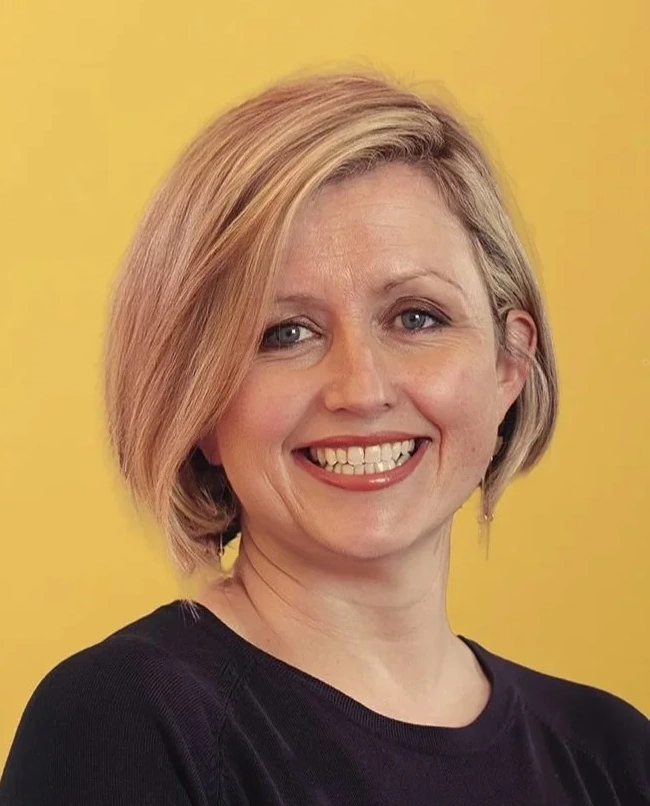
Andrea Pappin is a founder of Common Good, a public affairs and communications consultancy specialising in working with public bodies, semi-state agencies and organisations that serve communities or shape society. She has spent her career at the intersection of communications, strategy and public affairs in Irish and European public life, holding senior roles with the Department of the Taoiseach, European Movement Ireland, PwC and the European Commission, among others.
She has led communications for some of Ireland's most significant national moments, including the Brexit campaign and the Papal Visit. She has worked on two EU Presidencies, most recently as Official Spokesperson for the Irish Presidency in 2013.
For more information, read Common Good's full practical guide to EU2026.
Membership with Institute of Directors Ireland
Join our collective and become empowered, informed, and supported by a network of fellow pioneering directors.