Events
Driving Competitiveness Through Ireland’s EU Presidency
The Westbury Hotel, Dublin 2
In partnership with KPMG
Learn more

In this article, Lucinda Creighton, former Irish Minister for European Affairs and CEO of Vulcan Consulting, outlines what Ireland's Presidency of the EU priorities will mean for business.
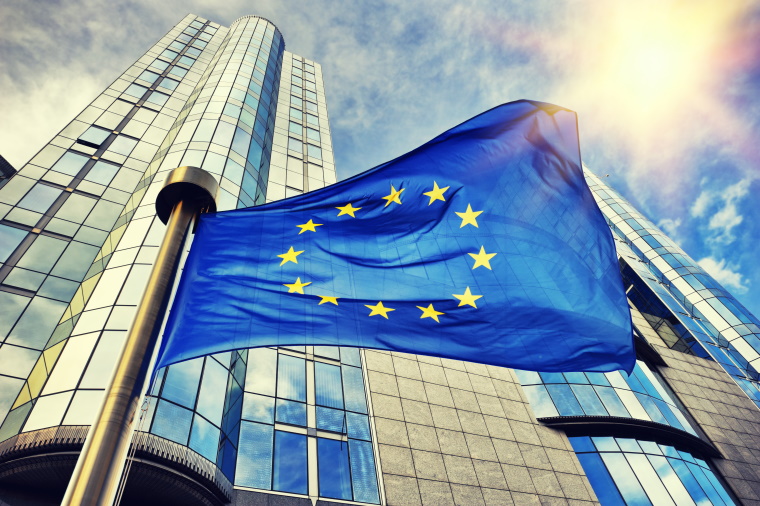
On the 10th of June 2026, Ireland launched its priorities for its 8th Presidency of the Council of the EU – Competitiveness, Values and Security. With the Presidency beginning on the 1st of July, the second half of 2026 promises to be action-packed, with 270 official events organised, Irish officials leading 180 different Council preparatory bodies and 80 interinstitutional meetings taking place. The pressure is on Ireland to deliver. The three Presidency priorities have significant linkages, overlaps and complementary elements. However, it will be Competitiveness where there is most expectation for Ireland to make progress and finalise legislation. With the Draghi and Letta reports still not close to being fully implemented, there is significant work to do in making Europe, and European companies, more competitive in a highly fraught global economic environment.
The EU’s Multiannual Financial Framework, or long-term budget, is at the top of Ireland’s Presidency agenda. The budget covers the entirety of the EU’s spending for the next seven-year period (2028-2034) with priorities ranging from Competitiveness (European Competitiveness Fund), Research (Horizon Europe), Connectivity and Telecoms (Connecting Europe Facility), and the Single Market (Single Market and Customs Programme). Concluding this legislative package would be a significant reputational win for Ireland, and indeed European companies. Each of the almost 40 individual pieces of legislation which make up the budgetary package will have a significant impact on business, ranging from funds for research, investment in digital technology and improving connectivity, boosting innovation in defence, as well as reinforcing and protecting the European single market. However, reaching a conclusion will not be an easy task, with countries still far from agreement and increasing pressure to reduce the funding amounts. It will take skilled diplomacy and political heft to finalise this package before the end of the year.
In April 2026, the European Commission, European Parliament and Council of the EU agreed a roadmap for key files, and for the first time, included projected deadlines to conclude each piece of legislation. The “One Europe, One Market” roadmap incorporates all the key pieces of legislation that are ongoing or are yet to be proposed with a view to achieving the vision for European competitiveness outlined by Mario Draghi and Enrico Letta over the past number of years.
The first step towards achieving this vision has been to complete an audit of existing EU legislation and regulation and propose simplification measures to reduce the burden on business and cut red tape where necessary. As such, so called “omnibus” proposals have been put forward in areas such as taxation, energy, agriculture, automotive, environmental, digital and defence. While some of the omnibus legislation has been concluded, for example on the Corporate Due Diligence Sustainability Directive and the AI Act, there are a significant number of proposals still awaiting conclusion. The pressure will be on Ireland to conclude all of these files by the end of the Presidency.
While cutting red tape, giving a boost to European companies is the second strand of the approach. In the past number of months, the EU has proposed legislation such as EU Inc (a new set of corporate rules to apply across the EU), the Industrial Accelerator Act (giving a boost to Europe’s industrial base), and a number of proposals to advance Europe’s capital market, including the Market integration and Supervision package, securitisation framework and the supplementary pensions package. These legislative proposals will be the core incentives to businesses to boost their ability to operate within the European Union. While EU Inc officially is open to companies of all sizes, in reality it will be more applicable for startups and small companies, allowing them to operate across the EU with one legal structure, as opposed to 27 different competing systems. The Industrial Accelerator Act seeks to boost Europe’s industrial manufacturing share from 14% to 20% of GDP by 2035. However, a key proposal included in this piece of legislation will be the more protectionist “Made in Europe” requirements, which will be closely watched by Irish businesses. Given the Presidency’s role as a neutral broker, it will be difficult for Ireland to object to the proposed “Made in Europe” elements, so this legislation should be watched most closely by Irish business who seek a more free trade approach.
Finally, to finance European companies to grow, the European capital market must be further advanced. From AI and digital to defence and security, European companies cannot grow without access to capital. As such, advancing work on files such as the Market integration and Supervision package will be essential to boosting European companies across all sectors.
Despite European efforts to make it easier for businesses to operate across the EU, external factors continue to put pressure on their capability. From mixed transatlantic messages when it comes to trade in digital and pharmaceuticals, to high energy costs as a consequence of global conflicts, European companies are faced with uncertainty and infrastructural pressures in a range of areas. To counter these elements, the European Commission has proposed the European Grids Package to build Europe’s energy sovereignty and reduce reliance on external countries. Ireland will be expected to advance this file significantly, if not conclude it entirely, by the end of the Presidency.
In addition, when it comes to boosting European businesses’ security and resilience in cyber, Ireland will be expected to make significant progress on the EU Cybersecurity Act. Similarly, the Cloud and AI Development Act which seeks to protect European access to cloud services and boost incentives for home-grown alternatives to American companies will be closely watched by European businesses, American providers, and administrations across the globe. Whether Ireland can make significant progress in these areas depends to a great degree on the European Parliament and whether their timelines can be accelerated to be ready to negotiate with the Presidency. In each of the aforementioned areas, it will be essential that Ireland keeps its eye on the prize. While each proposal was designed to reduce the burden on business and to boost European competitiveness, in reality it will be a challenge to ensure that this objective is advanced, while attempting to reach a compromise across all three major EU institutions. In this regard, the Irish Presidency will need to be ruthless in its approach and keep laser focused on the end goal – boosting European companies and European competitiveness
This article is the view of the author(s) and does not necessarily reflect IoD Ireland’s policy or position.

Lucinda Creighton is a barrister, former Irish Minister for European Affairs and Member of the Irish Parliament. She is the founder and CEO of leading public affairs consultancy Vulcan Consulting (Dublin, Brussels & Belfast). As Minister for European Affairs she represented Ireland in key negotiations on the General Affairs Council of the EU, the Foreign Affairs Council of the EU, as well as multilateral fora such as the OSCE, ASEAN Foreign Ministers meetings and the Council of Europe.
She was also at the heart of the EU’s response to the global financial crisis alongside European Prime Ministers. She was engaged in negotiations on Ireland’s EU/IMF bailout and helped frame the EU’s institutional response to the euro crisis. From 2012 to 2014 she also served as Vice President of the European People’s Party (EPP) and chaired the EPP European Affairs Ministers’ Council. Since founding Vulcan Consulting, Lucinda works closely with CEOs and senior management teams of global companies to assist them in understanding and navigating the political, policy and decision-making environment in Europe. Lucinda maintains a deep interest and expertise in Foreign Policy issues. From 2017 she served as the Senior Europe Advisor to the US NGO the Counter Extremism Project, focusing on security issues, violent extremism and terrorism. She is an Advisory Board member of the Washington DC based International Republican Institute (IRI) as well as being an active Council member of the European Council on Foreign Relations (ECFR). She is also a Non-resident Senior Fellow with the Digital Innovation Initiative at the Washington DC based think tank the Centre for European Policy Analysis (CEPA). Lucinda has recently joint the Trilateral Commission - an international forum where leaders propose solutions for global political, economic and security challenges.
She has also completed a Masters in Human Resources in the University of Limerick, she is CIPD accredited as well as being a trained mediator. Caroline is a Chartered Fellow of the CIPD, the professional body for HR and people development. Caroline completed her diploma in Company direction from the IOD with a Distinction and completed her assessment to become a Chartered Director of the IOD. Caroline had worked across various areas of HR for over 25 years in Kerry Group and in the retail and hospitality sector where she was the Operations and HR Director of the Garvey Group prior to setting up The HR Suite in 2009. She also has written 2 books, has done a TEDx and is a regular conference speaker and contributor to national media and is recognised a thought leader in the area of HR and employment law. Caroline also mentored female entrepreneurs on the Acorns Programme. Originally from Ballyheigue, Co. Kerry living in Dublin is very proud of her Kerry roots.
Events
Driving Competitiveness Through Ireland’s EU Presidency
The Westbury Hotel, Dublin 2
In partnership with KPMG
Learn more
Blog
Ireland’s EU Presidency: A Defining Test of Competitiveness and Resilience
Learn more
Blog
Ireland at the Helm: Practical Steps to be Taking Now for the EU Presidency
Learn more