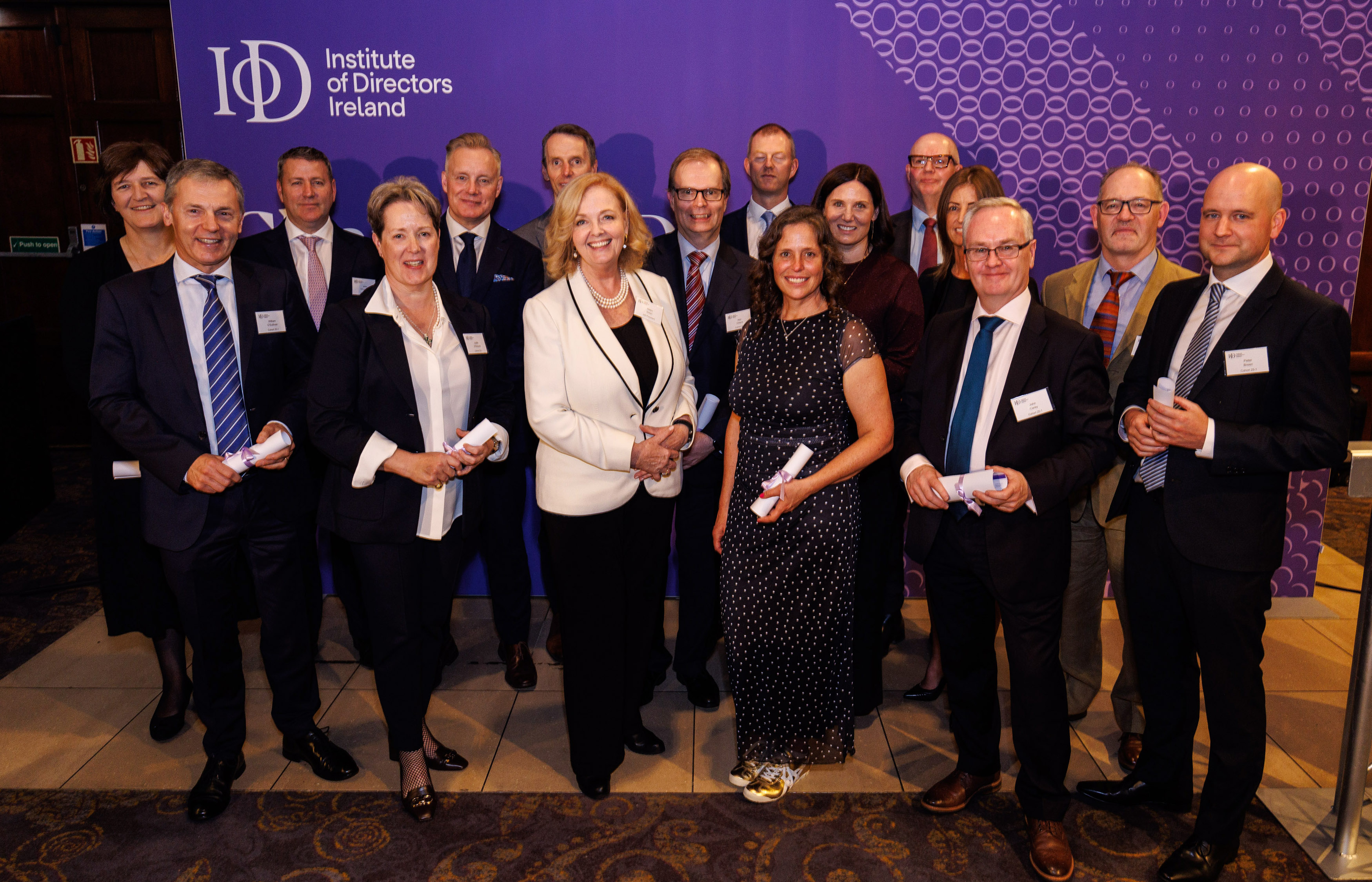
In this piece, Niamh O’Reilly, Executive Director of Learning and Education at the Institute of Directors Ireland, reflects on how continuous learning strengthens boardroom judgment.
Good governance depends on informed judgment. Boards are regularly required to reach decisions in circumstances where the evidence is incomplete, the interests involved are complex and the consequences may unfold over many years. Experience provides an essential foundation for this work. Continuous learning allows directors to keep that experience relevant as the context in which they govern changes. At Institute of Directors (IoD) Ireland, we support members and directors through a suite of learning and education programmes, from the Chartered Director Programme, which has opened for enrolment for January 2027, through to our workshop series and bespoke training offering.
Continuous learning for boards and directors matters more now. Artificial intelligence is altering business models and the conditions in which decisions are made. Cyber risk has become a matter of organisational resilience. Geopolitical developments can reshape supply chains, investment and strategic assumptions with little warning. These pressures reach the boardroom quickly, requiring directors to understand unfamiliar issues while retaining a clear view of organisational purpose.
Governance, Trust and Ireland’s Competitiveness
The significance of governance extends beyond any individual company or public body. The standards by which organisations are directed and held accountable influence the confidence they inspire and the legitimacy they sustain. Across business and public life, governance helps shape the trust on which organisations, institutions and society depend.
The Government’s recently published Ireland for Finance Strategy: Vision 2030 recognises this relationship. The strategy places trust, stability and high standards of governance at the centre of Ireland’s future competitiveness. It also acknowledges that Ireland’s position as an English-speaking financial centre within the European Union remains a significant advantage in a changing international environment. Sustaining that requires governance standards that engender trust.
Governance is one of the ways that trust is made tangible. It is expressed through the stewardship of resources, the treatment of risk and the alignment between organisational conduct and stated purpose. It shapes how strategy is developed and how leaders account for performance. Trust accumulates when those responsibilities are discharged with competence and integrity.
The Learning Board and the Human Side of Governance
Governance is often discussed as a set of structures and processes. In practice, it is exercised through people. It is a distinctly relational activity. In its best form, boards provide structures for decision-making, while the substance of their work emerges through conversation, challenge, persuasion and shared responsibility. Strategy takes shape through discussion. Assumptions are subjected to scrutiny. Different forms of expertise are brought to bear on a common problem. The quality of engagement around the board table has a direct bearing on the quality of the judgment that follows.
This human dimension is central to board effectiveness. Bob Garratt’s concept of the learning board places learning at the heart of governance, recognising that effective boards must continue to develop their understanding of the environment in which they operate. This concept has important implications for director education. Judgment does not develop in isolation. It is shaped through experience, exposure to different perspectives and a willingness to revisit established assumptions. Learning creates the opportunity for that process. It enables directors to reflect on their practice, engage with new ideas and explore their thinking with the experience of others. This is one of the reasons peer learning matters. The opportunity to learn alongside leaders from different sectors and organisational contexts can deepen understanding and build cross-sectoral networks.
IoD Ireland occupies a distinctive position within the Irish business community. We bring together directors and senior leaders from indigenous businesses, multinational companies, regulated sectors and public institutions. The director network creates opportunities for people working in different settings to examine governance challenges together. They frequently discover common questions about strategy, accountability and organisational purpose, even where their operating environments differ considerably.
Supporting Directors Through Lifelong Professional Development
Our learning and education offerings are more than just educational programmes – they are a vital resource for directors committed to excellence, leadership, and long-term value. By investing in their own development and that of their boards, directors can ensure they are prepared to meet the challenges of today and tomorrow. These services include our hybrid workshop series, bespoke board training offering and the gold standard chartered director programme.
The IoD Ireland Chartered Director Programme sits at the centre of our learning and education work. Its trusted, with an internationally recognised curriculum that is grounded in the realities of board leadership and shaped by a faculty who bring extensive boardroom and executive experience. Participants engage with governance, strategy and finance through the insight of practitioners who have chaired boards, led organisations and navigated complex decisions in practice. Their expertise brings governance to life, connecting ideas and frameworks with the realities of leadership and decision-making. Learning also takes place between participants. Directors arrive with different experiences, responsibilities and perspectives. The conversations that emerge are often as valuable as the curriculum itself.
The pathway to chartered director status reflects a commitment to continuing professional development throughout a director’s career. Beginning with the Certificate and Diploma in Company Direction and culminating in the internationally recognised chartered director designation, it combines study, professional experience and independent assessment. The designation recognises both director capability and a commitment to maintaining high standards of governance practice.
The next phase of learning and education at IoD Ireland will build on these foundations. Our focus will remain on supporting directors as they engage with the issues shaping contemporary governance and on creating opportunities for meaningful learning through practitioner expertise, informed discussion and the exchange of experience. The institute’s learning community is one of its greatest strengths. It brings together people working in different contexts who share a common responsibility: exercising sound judgment on behalf of the organisations they serve.
Ireland has the potential to become a leader in corporate governance. A learning board centres learning as part of good governance. The benefits extend beyond the individual director to the board, the organisation and the institutions that shape Irish life. In that sense, an investment in learning is also an investment in trust, stronger governance and Ireland’s future.
About the Author

Dr Niamh O'Reilly is Executive Director of Learning & Education at the Institute of Directors Ireland. Niamh leads the organisation's learning and education function, including director education, professional development and governance programmes. She has over 20 years' executive leadership experience across higher education, adult learning and public policy, including as Chief of Staff and member of the Executive Leadership Team of Maynooth University and Chief Executive of AONTAS. An experienced board member and committee chair, she has served on the boards of SOLAS and QQI, including as Chair of the SOLAS Audit & Risk Committee. She currently serves on the Higher Education Authority (HEA) board and has previously served on the Senate of the National University of Ireland and the board of the European Association for the Education of Adults.
IoD Ireland Chartered Director Programme
Enrolment open for January 2027