Blog
Navigating a New Age of Risk in 2026 – and What Boards Must Do About It
Learn more
A timely article from Q4 Public Affairs expert Rory Hogan, who discusses how Ireland’s fragile political landscape in 2026 will shape government decision making, and the country’s capacity to deliver on key policies during its EU Presidency.
After surviving early turbulence, the Government maintained a degree of stability through much of 2025. That steadiness unravelled in the final quarter, leaving Ireland entering 2026 not in crisis, but in a state of political fragility. For business, this matters less because of the risk of radical policy change and more because fragility constrains decision-making, slows delivery, and narrows the Government’s room for manoeuvre.
The presidential election marked a clear inflection point. Early assumptions that the contest was Fine Gael’s to lose were overturned by an extraordinary sequence of withdrawals and miscalculations that exposed organisational weakness across the political system. Fianna Fáil’s poor showing, running its first presidential candidate in nearly three decades, reinforced a sense that both governing parties are operating with thinner political capital than expected at this point in the cycle.
Internally, tensions sharpened. Fianna Fáil came close to open revolt against its leader, while Fine Gael lost a central stabilising force at Cabinet level, triggering an unprecedented reshuffle that saw its leader assume responsibility for the State’s finances. Both parties absorbed the immediate shock, but 2026 is the year when the consequences of those events begin to affect policy delivery, and by extension, the business environment.
Two by-elections, in Galway West and Dublin Central, will dominate the early part of the year. Their significance lies less in who wins the seats and more in how they shape political behaviour for the remainder of the Government’s term.
Firstly, they will test whether the newly energised and more co-ordinated opposition, evident during the Presidential election, can maintain discipline when real parliamentary power is at stake. Co-ordination around a symbolic presidential contest is fundamentally different from competing for Dáil seats that influence budgets, legislation, and confidence votes. Any breakdown in opposition cohesion would ease pressure on Government; sustained unity would further narrow its operating space.
Secondly, the contests will reinforce a familiar by-election dynamic, but in a more fragmented political landscape. Traditionally, these races narrow into a binary contest between a de facto Government candidate and a consolidated opposition challenger. In 2026, determining who occupies those roles is far less straightforward. Governing parties may find themselves competing with one another, while opposition parties attempt to coalesce quickly enough to avoid splitting the vote. For everyone in Ireland outside of those constituencies, the outcome matters insofar as heavy Government losses would encourage risk aversion and short-termism within Cabinet.
Thirdly, leadership pressure will intensify. A weak showing by Fianna Fáil in Dublin Central is widely anticipated. A poor result in Galway West, however, would increase strain on the party leadership at a sensitive moment. While a leadership challenge ahead of Ireland’s EU Presidency remains unlikely, the cumulative effect of electoral setbacks would further reduce appetite for difficult decisions in the first half of the year.
For business, the most consequential event of 2026 will be Budget 2027. This is likely the last opportunity for the Government to set out a meaningful policy driven Budget in the Government’s term given the length of time it will have remaining for delivery before the next general election.
The macroeconomic backdrop remains broadly positive, but it is more complex and less forgiving than in recent years. Corporate tax receipts are volatile, spending commitments in health, pensions and infrastructure are structurally higher, and both EU fiscal rules and domestic prudence limit the scope for large-scale giveaways. At the same time, Ireland’s export and FDI-driven model faces growing trade, tariff and regulatory uncertainty, particularly in digital and climate policy, risks that investors are increasingly pricing into medium-term plans.
Against that backdrop, Budget 2027 will signal whether the Government prioritises stability or reform. Key questions include the treatment of corporation tax beyond OECD minimums, the future of sector-specific levies, the direction of capital allowances and R&D supports, and whether spending choices crowd out productive investment. Political fragility makes targeted, politically defensive measures more likely than structural reform.
Simon Harris’s position as both party leader and Minister for Finance heightens these risks. Traditionally, the finance minister absorbs much of the political friction associated with saying “no” to spending demands. In this case, that buffer does not exist. Repeated refusals risk alienating Cabinet colleagues and parliamentary supporters alike, while miscalculation could embolden internal challengers.
More broadly, the greatest risk in 2026 is not abrupt policy reversal but policy drift. A Government under sustained pressure is more likely to defer contentious decisions, slow legislative progress, and prioritise short-term cohesion over long-term reform. The cost of drift is rarely captured in headlines, but it shows up in delayed planning reform, slower regulatory approvals, and extended timelines for major projects.
Nowhere is this clearer than in infrastructure. The updated National Development Plan enters a full delivery phase in 2026, with substantial pipelines across housing, transport, water, energy and digital infrastructure. Funding is not the binding constraint. Capacity is.
This translates into tangible operational challenges: housing shortages that complicate recruitment, multi-year waits for grid connections that delay investment, transport bottlenecks that limit regional growth, and airport capacity constraints that affect connectivity. Political caution, administrative bandwidth limits, and public acceptance issues all threaten to slow delivery at precisely the moment when execution matters most.
From July to December 2026, Ireland will hold the Presidency of the Council of the EU. This is a double-edged sword for many people in Ireland. On the one hand, it enhances Ireland’s international visibility, reinforces its image as a stable and constructive European actor, and provides opportunities to influence EU policy in areas such as digital regulation, AI, climate measures and competitiveness.
On the other hand, the Presidency places heavy demands on political leadership and the senior civil service. Domestic reform and delivery risk are likely to be deprioritised during the second half of the year which will extend timelines for decisions already under pressure.
Taken together, 2026 is less about political change and more about whether a fragile Government can still deliver decisions at the pace required to sustain growth. Key signals for business to monitor include: the stability of party leaderships through mid-year; the tone and substance of Budget 2027; progress on planning, grid and infrastructure reform; willingness within Government to absorb political risk in delivery; and market-facing messaging and follow-through during the EU Presidency.
If 2025 was about setting out plans, 2026 is the year in which delivery, or the lack of it, becomes decisive. The question is not whether the Government has strategies, but whether it retains the political capacity to execute them.
This article is the view of the author(s) and does not necessarily reflect IoD Ireland’s policy or position.
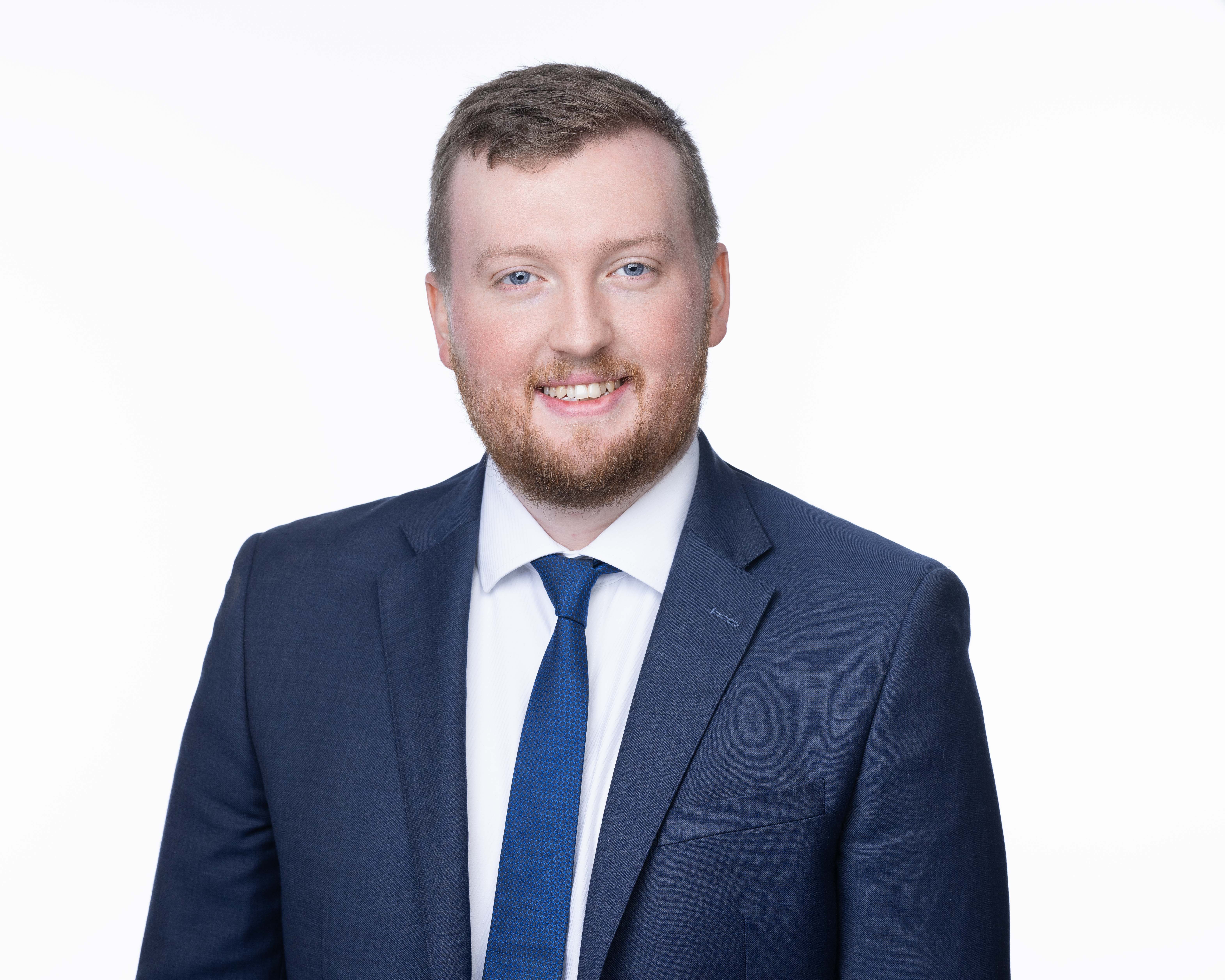 Rory Hogan is a public affairs specialist at Q4 Public Relations in Dublin, where he provides strategic analysis of government policy and the political environment for corporate clients. His insight is informed by extensive experience in politics, including his tenure in Leinster House as a Parliamentary Assistant to several TDs.
Q4PR is one of Ireland’s leading full-service communications companies. It was founded in 2003 by four partners with combined communications expertise that is unrivalled in the Irish market. Q4PR combines the expertise of four of Ireland’s foremost practitioners in corporate communications and public affairs (Jackie Gallagher, Angie Kinane, Martin Mackin, and Gerry O’Sullivan), supported by a highly-experienced team of senior specialists. The company’s founders have held senior roles in large corporates, PR agencies, political organisations, media and government.