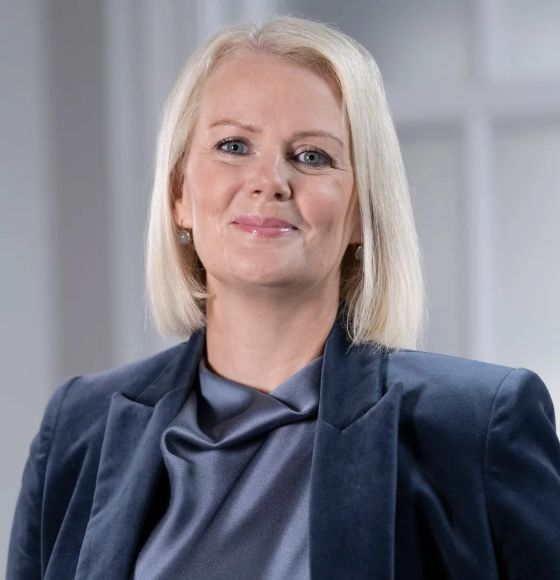
Sinéad Mahon
Experienced INED and Chair
Sinéad Mahon is an experienced financial services leader and independent non-executive director. An accountant by training, she has held senior leadership roles across banking and investment banking, and now brings her broad executive experience to a diverse portfolio of board roles.
What experiences helped prepare you for the boardroom?
For me, becoming an independent non-executive director (INED) was not a decision to simply stop being an executive and start a different career. The transition had been building for years. I had been thinking about doing something different long before I decided I wanted to leave executive life. That meant taking on different responsibilities and moving into situations where there was no obvious answer: picking up different tasks or stepping into places where the known way and the known solutions did not exist. The financial crisis was a particularly important experience. Organisations needed people who could stay calm and keep their back straight. By then, I was used to moving between different parts of organisations and solving problems that did not necessarily fit neatly within my job title. At KBC, where I started as a group accountant, I took on procurement, the canteen and other operational responsibilities to lessen my manager’s workload and add variety to my day. I would not be afraid, if something needed a solution, to say, “I’ll have a go at that.” Financial services was also an industry where the rules were changing quickly. No one had all the answers at that time, and I was comfortable figuring things out as we went along.
When did you decide to make the move into an INED career?
The final push came later. I moved into an organisation which needed a strategic refresh. I reshaped the business, helping the organisation to find a deliverable strategy and putting the business on a better footing. In doing that well, I more or less did myself out of a job. I asked myself, “Do I want to find another executive job?” The answer was no. Instead, I decided to give the INED route two years. Within the first quarter, I had agreed to accept three roles, and I knew then that there was a market for my experience as an independent member at board level. But I had already been preparing. As you become more senior, if you are a good professional, you enable your organisation rather than try to do everything yourself. That makes the transition less dramatic than it might appear. Becoming an INED is a step further, but it is not a flick of a switch. You are constantly building towards it.
What preparation and experience did you build before making the move?
I invested in formal director development through my involvement with IoD Ireland, including completing the Chartered Director programme. I did it with an eye on a future career, but it was about more than that. I wanted to build a network and prepare my mind for a different focus. I also gained experience outside my executive roles. I spent four and a half years on the board of a charity, and I was on a State board before I decided to go full-time.
What is the reality of managing a portfolio career?
One misconception is that a portfolio career means having more time. I am fairly disciplined. I used to get to work at seven o’clock, and the diary belonged to that organisation until probably 7pm. Everything was in one calendar. Moving into portfolio work required a different kind of discipline. Even for someone as organised as I am, it was a big step to put everything about my life into one diary. I now have to accommodate board work, client work, preparation and the unexpected. That is work too. I treat this as a career. There are various things I want to research and prepare, and I have to stay on top of things. IoD Ireland membership delivers real value to directors through events, resources and support that help them stay informed, relevant and up to date. The number of boards can also be misleading. On paper, being on five boards might seem like a series of quarterly or monthly meetings. That is not how it is. You are constantly on the phone or calling to visit in person. I have tried to corral the work into certain parts of the day: probably three busy days a week, with patchy bits on the other two. That gives me a little buffer when organisations need more.
How does the relationship with management change when you move from an executive role to the board?
The theory is “nose in and fingers out” for an INED. The board needs to understand what is happening, ask questions and challenge, but it must not start running the business. I think being a good INED is about probing and asking questions. That requires a degree of self-control when you have spent years being accountable for getting everything done and delivering. There can be a degree of ego in that. I am not perfect - nobody is - but what you are trying to do is leave the ego to the side. A really good INED encourages the management team to find answers for themselves. You look under the covers at things they may not have had a chance to examine, but you do not use that to penalise them. You ask, “How can we make this solution better?”
How do you decide whether a board is the right fit, and what does diversity mean to you?
Getting the right fit is important for both INEDs and firms, and I am selective about the boards I join. Some opportunities are discounted due conflict with my existing work, or due to fit for my skills and experience. Then the other processes start with good due diligence. I think I have a good sniff test. The chemistry needs to be right. I work hard to be a value-adding director, but what I offer has to match what is actually needed on the client side. If the connection isn't right, it does not mean there is anything wrong with the firm or with me; the fit just is not right at that time. I want to build a 20-year career out of this chapter, so I need the right portfolio. The portfolio that is right for me now might not be the one in 10 years’ time. I have a vision board above my desk to help me focus and think about what I am looking for in my next moves, when opportunities come my way.
I see diversity in broad terms. I am diverse in lots of ways, and gender is only one of them. In my CFO days, I was 10 years younger than everyone else, which mattered a lot more than the fact that I was the only woman in the room. Background matters too. I grew up in Tullamore, County Offaly. My parents were very encouraging, and I was the first person in my direct family to go to university. Education gave me belief in my ability and in the fact that I was as capable as anyone else. My time at PwC was formative. I am hugely complimentary about my experience in a training firm. The structures were layered, but there was a huge pool of people at the bottom, and background did not matter. It was a real meritocracy. What mattered was your ability to do the job and how much people enjoyed working with you as part of a team. That made me start to think, “I have something here.”
I learned that technical ability is only part of a career. From the very start, it is important to build an environment and culture where people can enjoy the work together, have a bit of fun and be themselves. Everyone has a responsibility to contribute. I tried to make myself easy to work with, and I did a good job. It is a combination of all of that. I was coachable, and I was not afraid to give back by coaching. I was not just taking; I was trying to give, and I could see that was how a firm became its best.
I have also been fortunate to learn from great people across the industry who took me under their wing and showed me the way, both at work and in broader professional life. They gave me something to emulate and aspire to. A career can involve luck or timing, but travelling the road with good people helps too. We are all more than the face who shows up at work. We have busy, rich and sometimes complicated lives, and I have valued the personal connections I have made over the last 30 years.
What role have IoD Ireland membership and its director development programmes played in preparing you for board work, and what advice would you give to others considering the INED path?
People sometimes ask me for a coffee and say they have done a course with IoD or elsewhere, worked in a particular team, reported to the board or presented to the board a couple of times a year. That experience can be useful, and it may be right for certain organisations. But to build a portfolio in which you can add value, a track record of accountability in decision-making is often needed. Companies are also looking to bring in directors with new skills that reflect our changing environment. I have found, though, that experience in the trenches has been vital in building a portfolio.
IoD Ireland membership and director development have been valuable parts of my preparation. The Chartered Director programme helped me build my governance mindset, confidence and network, and being part of IoD Ireland has supported me as I have developed my career as a director. Training is one part of the groundwork; it needs to sit alongside experience, relationships and a clear understanding of the contribution you can make.
My most honest advice is to be sure you are genuinely committed. Early conversations may try to entice you back into executive roles, so it can be difficult to have a foot in both camps. The groundwork needs to begin well in advance: get the training, build experience, be a team player, think about your impact and consider where you need to build your network. That preparation may start 20 years before you make the move.
You have to be meaningfully committed, because it will not be easy at the start. Do all the preparation you can, and be thoughtful about the boards you join. The boardroom may come later, but the work of becoming board-ready starts much earlier. IoD Ireland can help guide and support you along the way.