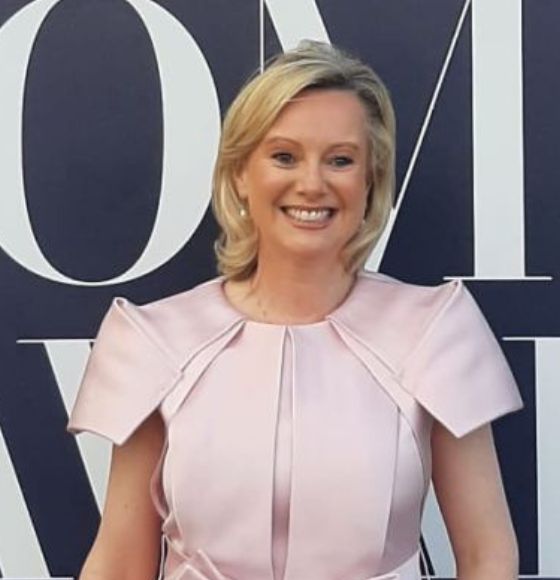
Professor Jean O'Sullivan
Clinical Professor Emergency Medicine
Jean O’Sullivan is a Consultant in Emergency Medicine and Clinical Professor at Trinity College Dublin. A non-executive director and advisor, she brings expertise in governance, crisis leadership and global health.
Professor Jean O'Sullivan is a Consultant in Emergency Medicine and Clinical Professor at Trinity College Dublin. Jean was recently shortlisted in the Social Entrepreneur Category of the IMAGE PwC Businesswoman of the Year 2026 Award on behalf of Global Emergency Care Skills, an organisation she founded that leads international training programmes across Africa. A non-executive director and advisor, she brings expertise in governance, crisis leadership and global health. Read more about her career, leadership insights and board perspectives.
As a Non-Executive Director, what perspectives from healthcare and emergency medicine do you believe are most valuable in the boardroom?
Emergency medicine is a highly regulated and scrutinised workplace. Success relies on your ability to rapidly assimilate information astutely, and analyse it, to form and execute a decisive plan in a high risk environment. One needs to be agile in responding to a changing situation. Risk identification and risk mitigation are part of regular practice. Daily we lead a diverse team with different capabilities managing a very fast moving environment.
As with a company’s stakeholders, one builds a trusting relationship with patients by being honest, by really listening to understand their needs and by consistently delivering a high quality service.
What are the biggest misconceptions boards may have about crisis leadership and resilience?
I think unfortunately some Boards don't think about crisis leadership until they are in the middle of one. A lot of risk is predictable. Crisis leadership is something we prepare for daily in emergency medicine.We regularly simulate major disasters or indeed catastrophic individual scenarios to learn how best to utilise our existing capabilities and resources to salvage a situation. Boards should be aware of and rehearse their contingency algorithms for managing any common potential threats to the well being of the company. Resilience during a crisis is rooted in practiced preparedness and a culture of accepting responsibility in an honest manner.
How important is governance education in helping sector specialists, particularly clinicians or academics, become effective board contributors?
Sector specialists can be a little blinkered and often will only interpret how challenges or change affect their particular area of expertise within a company. It’s imperative to understand all aspects of running a company and that’s where education is important. For example there is no point discussing a new therapy without any consideration to cost and a company’s capabilities to deliver that new product. Often subject experts can see a gap in the market and wish to direct the company to pursue an exciting novel new product without understanding that there might not be a viable market in that gap. Topic experts on a Board ought to be brave enough to contribute creative ideas but humble enough to recognise one’s own blind spots.
Through Global Emergency Care Skills and your international humanitarian work, you have operated in environments with significant resource constraints. What has that taught you about innovation and leadership?
When working in resource diverse environments you need to be very adaptable, flexible and open to being creative whilst keeping a clear vision of what you hope to achieve. Leading international projects has taught me to be respectfully curious about different cultural approaches and work as a collaborator bringing different teams together with the same goal. It’s always important to spend time getting to know your project partner and exploring their motivations and expectations.
Our motto in Global Emergency Care Skills is “Adapt & overcome”. Every course has brought its challenges but brings great opportunities for lateral thinking. One year in Zambia we were expecting 40-45 participants on our Trauma & Resuscitation Skills course, but over 148 people arrived. One faculty had to run three parallel courses, so we had to quickly recreate a three training environments, be very creative with equipment whilst maintaining a consistent high quality of learner engagement. We’ve had to run courses with missing equipment, unwell faculty, flooding and with no electricity. Another year I had pre requested a side of goat ribs to demonstrate a surgical lung procedure, but a live walking bleating goat was delivered instead! Managing a team of volunteers also requires a different style of leadership than when leading a team of financially rewarded employees working within the architecture of an established hierarchy.
Global health challenges increasingly intersect with business, government and society. Do you believe boards need to think more broadly about social change today?
Absolutely. Pandemics, natural disasters, conflict zones, climate change and the global shortage of health workers can affect a company’s access to markets, supply chain logistics, staff capabilities and consumer demands. Incorporating an awareness of health and social challenges into strategic planning and risk management is essential to fortify company resilience in a changing world. Global health challenges can also create opportunities for new markets and drive novel product creation. Also of course, a genuine strong focus on ESG is essential for employee, customer, community and investor satisfaction.
As a Clinical Advisor to MedTech companies, you sit at the intersection of healthcare, innovation and commercial enterprise. What opportunities or risks do you believe boards should be paying greater attention to?
Obviously everyone needs a focus on how AI and other technology can be incorporated into the delivery of healthcare. I think both the cost of healthcare delivery and the global shortage of healthcare workers will be a huge driver in innovation. As populations age and care becomes more complex, economies cannot afford to deliver healthcare the same way we have to date. Bespoke care in high resource health services will be driven by more personalised health information from DNA mapping and new biochemical markers. Educated populations will no longer accept survival statistics based on other people’s data as an estimated predictor of their health outcomes. Anti-aging, weight management and fertility are current huge markets. I think that functional longevity, preventative health screening and psychological care will continue to be growing markets. In terms of risks, another pandemic is a real possibility as is greater drug & device supply chain disruption. The impact of a healthcare workforce shortage globally cannot be overestimated.
How do you see technology, particularly AI and digital health, reshaping emergency medicine and healthcare governance over the next decade?
AI should enable Emergency Medicine to offer quicker more bespoke care to patients based on their gender, metabolic profile, ethnicity and previous medical history from intelligence swiftly gathered from both their electronic health records and international best practice. AI is already transforming research and education in medicine and will hopefully help to train more healthcare staff in remote and diverse income settings. AI could help clinical trials bring drugs and devices to market quicker. There will be greater potential to witness emerging health trends in real time through data interrogation, informing investment trends, innovation opportunities and national healthcare policy planning. In terms of governance, obviously protecting how personal sensitive data is stored and harvested will be of paramount importance. Indemnity and risk management against poor clinical outcomes will be an important factor influencing how AI clinical assistance tools will be incorporated into daily practice.
Your work has involved high-pressure clinical environments, international humanitarian initiatives and board responsibilities. How do you maintain perspective and resilience personally?
I think it’s so important to stay “mission focused” in each different role and learn what does and more importantly does not need your immediate reaction or involvement. There is no other way to build resilience than through experience, both good and bad. It takes time to learn to have clear boundaries on where your energy goes whilst still maintaining an open curiosity about new projects. Staying physically healthy and prioritising time with family, friends and sport is the best way to keep professional performances consistent.
If there is one leadership lesson you believe every director should understand, what would it be?
Lead by enabling others to shine and reach their highest potential. Inspire team members to believe in themselves not just in you.Honest communication, own your own mistakes, appreciate others and understand what different factors motivate people are all essential to succeed at uniting people to achieve a common purpose.
You completed the IoD Diploma in Company Direction. How has this programme influenced your approach to being a Non-Executive Director?
I had served on charity boards and a State Board for several years before I completed the IoD Diploma in Company Direction. The Financial module demystified Company accounts for me but the module I enjoyed the most was Strategy. It opened up the more creative aspect of being a NED and inspired me to explore very different types of Board positions. Doing the Diploma with the stellar class of Cohort 83 from many different professional backgrounds, really helped me to realise that skills one acquires in Emergency Medicine are often very valuable and applicable to other industries.
The role of the director continues to evolve rapidly. How important are organisations such as the IoD in supporting directors to embrace that change?
IoD Ireland workshops and events have been invaluable in providing expert advice on topics such as cybersecurity, geopolitical change, AI and Board psychology. For me, the most valuable aspect of IoD Ireland membership is the community you join. We are lucky that in Ireland networking and connecting are part of our character. The IoD Ireland gatherings foster a culture of encouragement and cultivating relationships. I am very grateful to so many people in IoD Ireland who have been incredibly generous with their time and advice.