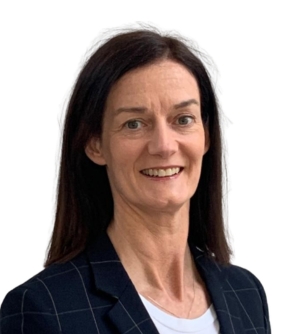
Grace Gilligan
Non-Executive Director, Fexco International Payments Ltd and Head of Credit, Fexco Asset Finance
Grace has strong over 20 years’ experience in international and Irish banking, leading large credit portfolios across diverse sectors. She specialises in credit risk, lending, debt restructuring and governance, with board-level responsibility for credit policy, risk appetite, regulatory compliance and strategic portfolio management.
You’ve built a career across lending, capital markets, restructuring, risk and now the boardroom. Looking back, what experiences most shaped how you lead today?
The breadth of my career across more than 35 years is the single biggest influence on how I lead. I started in branch banking in Leicester, working directly with SMEs and high net worth personal customers, many of them in the Irish business community that had built successful enterprises in the UK. That gave me something I’ve drawn on ever since: a real understanding of what it means to run a business and the importance of building genuine trust-based relationships. It also gave me an early appetite for business development that has stayed with me throughout.
Moving into capital markets, originating and managing European and US corporate debt across syndicated loans, bonds and credit products, broadened my perspective enormously. I learned to read markets across different cycles and to think strategically about where risk and opportunity intersect. Later, I managed a portfolio of foreign direct investment companies. This gave me exposure to the Irish subsidiaries of major international businesses and how to develop meaningful relationships with sophisticated counterparties. What runs through all of it is a conviction that the best financial services leaders are fundamentally in the business of helping organisations grow. Commercial ambition and sound risk judgement are not in tension if you approach them with the right mindset.
You’ve managed portfolios through changing market cycles and more challenging environments. What have those experiences taught you about decision-making under pressure?
The most valuable habit I’ve developed is reading ahead and understanding where markets and sectors are heading, not just where they are today. The quality of decision-making is largely determined by the quality of the analysis that precedes it. I’ve learned to pay close attention to early signals like shifts in cashflow patterns, market sentiment, emerging regulatory direction and to act on them proactively rather than reactively.
The portfolios and businesses that navigate cycles well are rarely those that respond fastest when things change. They’re the ones that anticipated the change and positioned accordingly. Under genuine pressure, what matters most is having robust frameworks in place before the pressure arrives, and a team that trusts both the process and each other. Good decision-making under pressure is really the product of good preparation in calmer times.
You now serve as a Non-Executive Director while also holding an executive leadership role. How does sitting on both sides of the board table shape your perspective?
Considering numerous perspectives is something I’ve been doing since long before I sat on any board. My mother has always had a remarkable ability to think around a situation and weigh up the options. It’s something I absorbed growing up and have carried into my professional life. So in some ways, sitting on both sides of the board table has felt like a natural extension of how I already approached decisions.
Throughout my career I’ve always asked myself, if I were the person receiving this information, what would I want to know and how would I want it communicated? That habit of stepping into the other person’s position shapes how I structure a board paper to how I engage with a management team. Practising it consistently makes a real difference to the quality of communication and the trust it builds. I have a strong internal compass when it comes to governance and a clear sense of what the right decision is and why. Not right because it’s commercially convenient, but right in the fuller sense: sound, fair, defensible, and made for the right reasons. Good governance, at its core, is that compass applied at an organisational level.
Executives can sometimes see the board as a reporting obligation rather than a source of strategic value. Non-executives without operational experience can lose sight of the complexity of delivery. Having lived both realities, my executive experience makes me a more grounded non-executive, and my governance experience makes me a more effective executive. The two roles genuinely make each other better.
Credit and risk functions play a critical role in sustainable growth. How do you ensure they act as strategic enablers as well as strong governance functions?
The early days of my career in capital markets taught me that portfolio construction is both a credit discipline and a strategic one. Managing concentration risk and sector exposure while hitting an income budget and maintaining credit quality are inseparable. You cannot grow a sustainable book without being deliberate about both. The starting point in any organisation is ensuring credit policy and risk appetite are genuinely aligned with the board’s strategic ambitions from the outset. The board’s risk appetite is the anchor. It defines where the business can grow, what it should pursue, and critically, what should not go into the lending book. Knowing what you won’t lend into is every bit as strategic as knowing where you will grow. In various credit risk positions I have been involved with, strong growth has been achieved through a genuinely prudent approach to the type of lending put on the book. That growth happened because of a disciplined credit culture, not despite it.
Many directors are navigating uncertainty - interest rates, regulation, geopolitical risk and technology disruption. What should boards be focusing on right now?
The boards navigating this environment well are those that can focus on how these forces interact rather than treating each challenge in isolation. For example, how interest rate shifts affect credit quality, how regulatory change creates competitive opportunity as much as compliance burden, how technology can amplify or mitigate risk depending on how it is governed. Technology and AI are creating real opportunity in credit decisioning and portfolio monitoring, but introduce governance challenges around model risk, data quality and ethical lending that boards must engage with seriously. And fundamentally, boards need to ensure they have the right mix of expertise and diversity around the table. The pace of change means that standing still on board composition is itself a strategic risk.
What advice would you give executives who aspire to move into Non-Executive Director roles but aren’t sure how to make the transition?
Be deliberate about it and start earlier than feels necessary. The NED role is substantively different from executive leadership. You are there to ask the right questions, provide independent perspective, and support and challenge the executive team, not to manage. That distinction takes time and practice to internalise. Engage with IoD Ireland's development programmes and seek out board-level experience wherever possible - whether through subsidiary boards, charities or advisory roles. The combination of formal governance education and practical board experience is invaluable. You need to be clear about what genuine expertise you bring. Boards are looking for deep knowledge in areas that matter to them such as credit, risk, sustainability, technology, strategy. The more specifically you can articulate your offering and back it up with a track record, the stronger your position will be.
Was there a defining challenge in your career that particularly shaped your leadership approach?
Not one single challenge, but a series of them. Each role, organisation and market has added something to my leadership approach. One of the most formative experiences was building a US debt-focused business from Dublin. Success depended on being in the market, building relationships face to face and understanding clients' needs first-hand. It reinforced a lesson I've carried throughout my career: meaningful business development comes from investing time in understanding your market and earning trust.
Another recurring challenge has been navigating strategic shifts when market conditions change. There are times when you have to rethink where future growth will come from, make difficult decisions about what to stop doing, and redirect resources with confidence and clarity. Those moments test a leader's judgement more than anything else. I've also been fortunate to work alongside exceptional colleagues who continually challenged my thinking. Every experience - particularly the difficult ones - has been an opportunity to learn, adapt and become a better leader.
What has membership of Institute of Directors Ireland meant to you, and why should directors and business leaders invest in governance and continuous development?
It has meant a great deal. IoD Ireland offers something genuinely difficult to find elsewhere: a community of directors committed to governance, alongside development programmes that evolve with today's boardroom challenges. The Certificate and Diploma in Corporate Direction programmes have been invaluable. They bring together leaders from a wide range of sectors, broaden your perspective, fill knowledge gaps, and help you apply your experience more effectively in both executive and board roles. The member events are another real strength, providing practical insights from leading experts while creating opportunities to build relationships with directors across different industries and career stages. Those conversations often offer perspectives you simply don't gain from working within a single organisation.
Continuous development is non-negotiable for any director who takes their responsibilities seriously. Boards face increasingly complex risks, greater regulatory scrutiny and higher expectations than ever before. I've pursued qualifications throughout my career in credit, risk management, conduct risk and sustainable finance because staying current is part of the commitment you make when you take a board seat. For me, IoD Ireland has been an excellent partner in that journey.