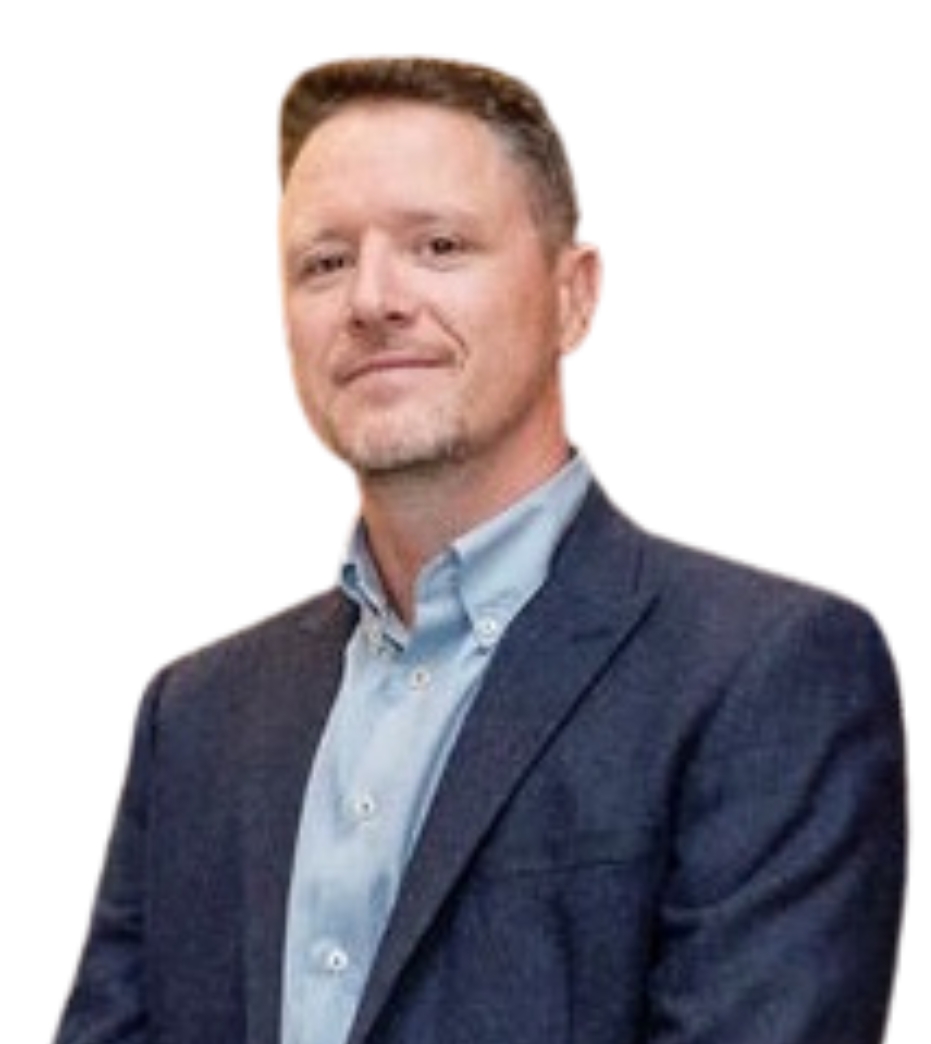
Ger Perdisatt
Founder and CEO, Acuity AI
Ger Perdisatt is CEO and Founder of Acuity AI, advising senior leaders on the practical implementation and governance of AI. He brings deep enterprise leadership and board‑level experience, supporting organisations to translate emerging AI capability into effective oversight and measurable business value.
Can you tell us about your career journey to date
I started out in technology and private banking, about ten years across both before I made the move to Microsoft. I joined midway through my MBA because I genuinely felt we were on the cusp of a big digitisation wave and I wanted to be inside it rather than watching it.
Fifteen years followed, first across Ireland then leading commercial and technology strategy teams across Europe, through several waves of platform change: on-premise to cloud, software to services, and now AI. I left because I could see two things clearly. Organisations were going to struggle with the practicality of AI, not the theory. And outside of the largest enterprises, most companies wouldn't have access to the right-sized expertise and resources to figure it out. That's the gap Acuity AI Advisory was built to fill.
Alongside that I sit on the boards of daa and Tailte Éireann, and I work with the Institute of Directors on board-level AI capability, including the IoD AI Governance Toolkit.
What does leading through complexity at scale teach you that smaller organisations often underestimate?
Ultimately, regardless of size, you're relying on people to use judgement to get things done, individually and collectively. People want to be given the tools to do the job. They want a balance of direction and autonomy. And they want to be recognised for good work. If you can break complex moves down into real tangible steps and benefits, you can get through a lot. The other thing scale teaches you is a particular kind of patience. You can overestimate what you can get done in a month and underestimate what you can get done in six. Strategic patience isn't just about knowing when to do things. It's also the patience to stick with them.
Why do some transformation programmes succeed while others stall?
The ones that succeed know the difference between launching something and landing it. Everyone launches: the announcement, the kickoff, the first wave of training. What happens afterwards is less exciting but more important. The follow-through, the course correction, the relentless asking of whether anything has actually changed. The programmes that stall mistake the launch for the work. They don't fail for lack of ambition. They fail because nobody owns the landing.
Where are boards getting AI right and where are they still asking the wrong questions?
What boards are getting right is driving more of a governance agenda. That's a real shift and it matters. Where I think the questions are still wrong is in the worldview. I hear a lot of "what is the organisation doing on AI" but I very seldom see boards using AI individually or collectively themselves. That creates a cognitive dissonance and an experience gap that's hard to bridge. It's difficult to govern something you've never touched. And that experience gap shows up in the questions that don't get asked. Most boards can't tell you what AI is already running in their organisation, or who is accountable for it. If you can't answer that, the governance conversation is running on assumptions.
Another deeper question is whether the organisation is actually learning from its AI use, not just deploying tools, but measuring what's working, catching what's failing, building institutional knowledge over time. The organisations that get ahead won't necessarily be the ones that move fastest. They'll be the ones that learn fastest - and that's not always an easy thing to prove or justify.
How can directors distinguish between genuine AI strategy and expensive theatre?
Genuine AI strategy is actually straightforward to identify. It tends to be bottoms-up, driven by solving specific problems. It tends to operate as a pull model, where the organisation is trying to go at the speed of demand for solutions rather than pushing things out because it's AI. And the clincher: if you turn it off, or there's an outage, it has a real impact on the business. If none of those things are true, it's theatre. The other tell is what gets measured. Activity metrics, number of pilots, percentage of staff trained, tools deployed, are theatre. Outcome metrics, cycle time, error rate, revenue per case, customer effort, are strategy. Ask for the second list!
What changes in mindset when you move from executive responsibility to non-executive oversight?
The best lesson I got from an experience NED was four words: "nose in, fingers out".
You're there to understand what's happening and to ask the questions that test it. Not to run things.....and that can be HARD when your career has been built on running and executing things. The practical shift is that you need to listen way more than you talk. You need to learn to ask better questions, not statements with a question mark appended at the end. You need to listen to the answers, what's in them and what's not. And you need to observe longitudinally, tracking how things develop over time, in a way that most executive roles don't require. The picture you build over six board meetings tells you things that no single meeting ever will.
Where does Ireland need to think more boldly over the next decade?
Two things, and they're connected. The first is the integration of the physical and the digital. I don't mean the "every company is a software company" version of that. I find that framing more lazy than useful. I mean something more specific: organisations managing physical assets, in manufacturing, agriculture, retail, built environment, infrastructure, are sitting on enormous potential that most aren't close to unlocking. Digital twins that let you model and stress-test before you commit. Procurement that tracks value-in-use rather than just price-at-purchase. Datasets opened to citizen science generating far more public and commercial value than any single organisation could extract alone. The opportunity isn't to become a tech company. It's to bring digital thinking into the core of what you already do. The boldness required is less about technology and more about imagination.
The second is knowing who we are and what we've actually built. Ireland has spent forty years becoming world-class at attracting investment. What we've been slower to build is confidence in what we ourselves produce. The indigenous SME base, the services sector, the university output: it consistently punches above its weight and consistently undersells itself. And we haven't fully recognised that being inside the EU regulatory perimeter is a competitive asset, not a compliance burden. Irish-regulated, Irish-governed, Irish-credentialled means something that most of our competitors can't replicate. The bold move isn't to become something we're not. It's to back what we already are.
How do you personally continue learning and staying sharp?
A lot of it comes from beating the algorithms. I deliberately subscribe to a wide spectrum of voices, perspectives and channels, including plenty that challenge my own thinking. The risk with algorithmic feeds is that they narrow your world without you noticing. Beyond that, I learn by doing. In an AI company you have to drink your own champagne. I use the tools, run the experiments, sit with the things that don't work. And then I use AI itself to keep on top of it all. It's changed how I process information. I can dig into something complex, at the time and pace that suits me, and come out with a much clearer view than I'd have had otherwise. But I don’t think learning can be entirely self-directed or digital. Structured programmes and workshops still play an important role particularly because they create space for real-time peer learning. Being in a room with other experienced people, hearing how they’re tackling similar challenges, and testing your own thinking in that environment is something AI can’t replicate. That exchange of perspectives is often where the most valuable insights come from.
What value do you get from IoD Ireland, and what makes a professional membership worthwhile today?
I'm convinced the world is moving towards more personal connection, peer engagement and curated communities, not less. IoD Ireland is uniquely positioned to deliver that in Ireland, with a long legacy and a genuinely diverse community. The value isn't just the events or the resources. It's being in a room with people who carry the same kind of responsibility you do and who'll tell you straight when you're getting something wrong. That's rarer than it sounds. And when something genuinely new lands, and AI is genuinely new, there's real value in an institution that can hold the standard while the rest of the conversation gets noisy.
One piece of advice to current CEOs, Chairs and aspiring non-executives?
Be the person in the room who asks the obvious question. The one everyone is thinking but no-one wants to be the first to say. That's where most governance value is actually created.
What are you most optimistic about for Irish business over the next five years?
The quality of leadership coming through. The people running organisations now have already navigated more change than most generations see in a career: financial crisis, pandemic, hybrid working, and now AI arriving at pace. They're pragmatic, internationally calibrated, and they don't waste time on hype. Give them the infrastructure and the capital to work with and they'll do the rest.