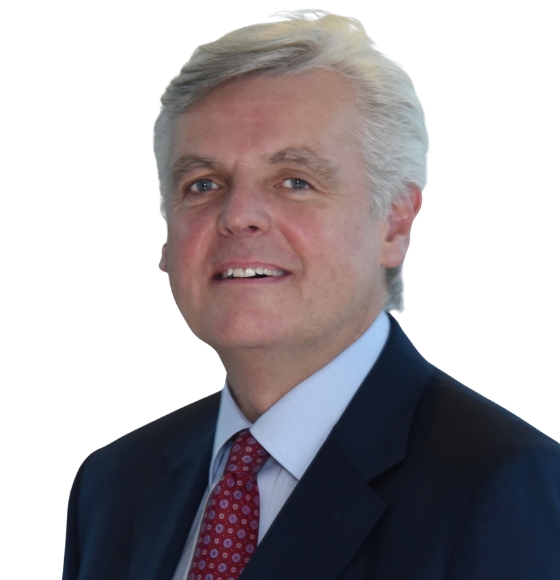
Fintan Foy
Chief Executive Officer, Irish College of GPs
Fintan has served as CEO of the Irish College of General Practitioners since 2017, bringing international leadership experience across healthcare, medical education, regulation and organisational governance. He has held senior executive and board roles across multiple professional bodies and institutions.
Fintan Foy is Chief Executive Officer of the Irish College of General Practitioners (ICGP), where he has led the organisation since 2017. Fintan is a member through the ICGP's IoD Ireland Board Membership. He brings more than three decades of leadership experience across Ireland's healthcare, medical education and professional regulatory sectors, and currently serves on the Board of Dublin Dental University Hospital. His previous appointments include CEO of the College of Anaesthetists of Ireland, Council Member of the Pharmaceutical Society of Ireland, and Associate Director for Academic Affairs at the Royal College of Surgeons in Ireland.
Tell us a little about your current role, the work and mission of the organisation, and the leadership journey that brought you to this position.
I currently serve as Chief Executive Officer of the Irish College of GPs, the professional and training body for general practice in Ireland and have been in that role for the last nine years. Our mission is to improve patient care by strengthening general practice through education, standards, research and effective advocacy. A key focus is ensuring that general practice is positioned to meet growing and increasingly complex demand.
In my role as CEO, I work closely with the Board to set strategic direction, ensure strong governance and deliver organisational performance. This includes overseeing a complex education and training infrastructure while engaging with government and key stakeholders on workforce planning, resource allocation and healthcare policy. Ensuring financial sustainability, effective risk management and organisational resilience is also central, alongside building and supporting a strong senior management team.
My leadership journey has been shaped by nearly 30 years working in organisations such as the Royal College of Surgeons in Ireland and the College of Anaesthetists. Over time, I have been drawn towards roles where I could contribute to strategy, organisational development and broader sectoral impact. I believe effective leadership is about creating the conditions for sustainable performance while ensuring organisations remain agile and responsive to changing environments.
As CEO of a major professional medical body, how do you see the role of the board in supporting organisational purpose, trust and long-term impact?
I see the Board as central to safeguarding the organisation's purpose, sustaining trust and ensuring long-term impact. The Board's role is one of stewardship, ensuring the organisation remains true to its mission while continuing to be viable, relevant and forward-looking.
As both a medical education body and a membership organisation, we operate within a unique environment where there can be competing priorities across education, standards, advocacy and policy engagement. The Board plays a critical role in ensuring decisions remain anchored to our core purpose of improving patient care through strong general practice.
From my perspective, the quality of the executive-Board relationship is fundamental. The most effective Boards strike the right balance: engaged but not over-intrusive, strategically focused but well informed, and committed to collective responsibility. My role is to ensure the Board has the information, insight and assurance it needs to govern effectively while creating an environment where open and candid discussion can take place.
What distinguishes a high-performing board in a member-led healthcare organisation from a more conventional corporate board?
The fundamentals of good governance - accountability, transparency, strategic oversight and risk management - remain the same across all sectors. What distinguishes a high-performing board in a member-led healthcare organisation is how those principles are applied within a more complex stakeholder environment.
Members are, in effect, the shareholders. While they are not seeking a financial return, they have clear expectations around value, whether through education, training, research or professional standards. Boards therefore need to balance organisational priorities with member expectations while maintaining a long-term perspective.
Board composition is another differentiator. Member-led organisations often benefit from deep professional expertise alongside representative perspectives. This is a significant strength, but it requires discipline to ensure decisions remain organisation-focused rather than driven by sectional interests. High-performing Boards are able to draw on that expertise while maintaining strategic focus and collective responsibility.
Healthcare leadership today involves significant complexity, scrutiny and public expectation. How has that changed the role of the CEO and what makes for an effective CEO-board relationship in that environment?
Healthcare leadership has become significantly more complex in recent years, driven by workforce constraints, resource pressures and increased public scrutiny. CEOs today are required to navigate competing priorities while making decisions in environments where there is rarely a perfect solution.
The most important element of an effective CEO-Board relationship is transparency. My responsibility as CEO is to ensure the Board understands both the complexity of the organisation and the wider environment in which we operate. Nothing should be hidden. In turn, the Board must create a space where challenge is robust but supportive and where difficult issues can be explored openly.
Clarity of roles is equally important. During periods of pressure, there can be a tendency for Boards to become more operationally involved. High-performing relationships are those where boundaries remain clear: the Board focuses on the "what" and the "why", while the CEO and executive focus on delivery. Maintaining a shared understanding of organisational purpose and priorities is essential to making that relationship work effectively.
Healthcare systems are constantly evolving. What have recent years taught you about board agility, decision-making under pressure and the importance of risk oversight?
Recent years, particularly during and after the pandemic, reinforced just how important board agility, effective decision-making and robust risk oversight are to organisational success.
Boards must be capable of convening quickly, processing information efficiently and making timely decisions without compromising governance standards. That requires clear prioritisation and a willingness to delegate appropriately to the executive within agreed parameters.
Risk oversight has also become increasingly dynamic. Workforce shortages, cyber threats and reputational issues have demonstrated how rapidly risk profiles can change. Boards need to adopt a more forward-looking approach, placing greater emphasis on scenario planning, early warning indicators and organisational resilience.
The effectiveness of that oversight depends significantly on the quality of information provided by the executive team.
From your experience, what leadership behaviours build board confidence and contribute most to organisational culture and performance?
Transparency is the leadership behaviour that builds the greatest level of board confidence. Boards need a clear and honest understanding of organisational performance, including both successes and challenges. Bringing issues forward early, rather than waiting for them to escalate, creates better conditions for decision-making and demonstrates trust in the governance process.
Respect for governance and role clarity is equally important. Effective CEOs support good governance by engaging the Board at the appropriate level, focusing discussions on strategic matters and ensuring Board time is used effectively.
Leaders must also be comfortable with challenge. Constructive challenge should never be viewed as a threat. When CEOs welcome diverse perspectives and informed questioning, it strengthens decision-making and contributes to a culture of accountability and continuous improvement. That is not always easy, but it is a skill that develops through experience.
How important is ongoing board development and education in sectors experiencing rapid change such as healthcare?
Ongoing board development and education are critically important, not just in healthcare but across all sectors. For Boards to provide meaningful strategic oversight and challenge, they need to continuously update their understanding of the external environment and the capabilities required to respond to emerging challenges.
From a CEO perspective, investment in Board development leads to more focused discussions, stronger strategic direction and more effective challenge. It helps ensure governance remains enabling rather than constraining, supporting organisational agility while maintaining appropriate oversight.
Board development also sends an important cultural signal. When a Board demonstrates a commitment to learning and self-improvement, it reinforces the importance of continuous improvement throughout the organisation.
What role does governance play in protecting organisational reputation and maintaining stakeholder confidence during sensitive or high-profile issues?
Governance plays a central role in protecting organisational reputation and maintaining stakeholder confidence, particularly during sensitive or high-profile situations. In many respects, reputation is the outcome of good governance, how decisions are made, communicated and overseen over time.
The CEO-Board relationship becomes especially important during these periods. Trust and open communication are essential. CEOs must be prepared to escalate concerns early and provide candid updates as situations evolve, while Boards must provide both challenge and support.
The most effective Boards create an environment where difficult issues can be surfaced and addressed before they develop into larger reputational risks. That ability to engage constructively with emerging challenges is one of the strongest protections an organisation can have.
Looking ahead, how should boards prepare for increasing complexity around workforce pressures, digital transformation and public expectations, and what skills will future directors need?
Boards will need to become increasingly proactive, informed and adaptive in order to navigate growing complexity around workforce pressures, digital transformation and rising stakeholder expectations.
Preparing for the future will require Boards to broaden their perspectives, deepen their capabilities and evolve their governance practices. Directors will need a stronger understanding of areas such as technology, cybersecurity, organisational resilience and workforce sustainability, while continuing to provide sound strategic oversight.
Equally important is ensuring the right mix of skills around the Board table. No individual can be an expert in everything. High-performing Boards will be those that bring together diverse experience, perspectives and expertise that reflect the challenges and opportunities facing the organisation.
Looking back on your leadership experience, what have been the most important lessons about governance and leadership partnership?
One of the most important lessons is that effective governance and leadership partnerships are built on trust, honest communication and alignment around purpose.
I have also learned the value of constructive challenge. High-performing Boards are not passive; they test assumptions, ask difficult questions and bring different perspectives. As a CEO, being open to that challenge leads to better decisions and stronger outcomes.
I often say that even at this stage of my career, I am still nervous before a Board meeting. It is not fear of the unknown; it is the hope that I and my executive team have provided the Board with all the information they need to make sound decisions and ask the right questions. That sense of accountability remains important.
Ultimately, successful governance depends on a culture where challenge is informed, respectful and focused on achieving the best outcomes for the organisation.
What role do organisations such as IoD Ireland play in helping directors and executive leaders strengthen governance capability, leadership effectiveness and board confidence?
Strong governance cannot be taken for granted. While Board members often bring significant executive, professional, and sectoral experience, operating effectively at Board level requires a distinct set of skills, perspectives, and responsibilities. IoD Ireland Board Membership provides us with access to resources, insights and professional development. It helps ensure we remain informed about emerging issues, evolving regulatory expectations, and the challenges shaping organisations today, from cybersecurity and AI to wider organisational and societal change. Perhaps most importantly, IoD Ireland Board Membership reinforces the principle that good governance requires continuous learning. It supports business leaders and directors in exercising sound judgement, providing constructive challenge, and maintaining the confidence needed to make decisions in the long-term interests of the organisation.