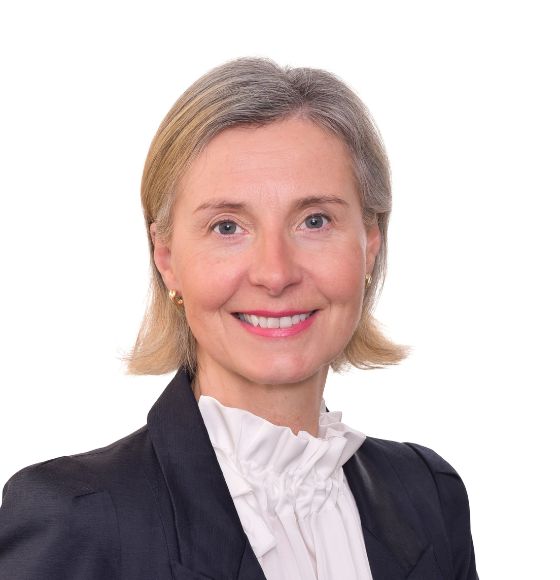
Aideen Cardiff
Independent Non-Executive Director
Aideen Cardiff is a highly experienced director and business leader who has successfully operated at senior management level in three of the worlds leading technology companies. She currently serves as Chair of WorkEqual, an Irish registered charity and is a board member at St. James Hospital and serves on the Audit and Risk committee.
You’ve worked across major global technology organisations and consulting. Can you talk us through your career journey and the key moments that shaped your leadership path?
I spent over three decades in senior leadership roles with organisations including HP, IBM and Microsoft, working across Ireland, the UK and Europe. My roles spanned sales, consulting, partner ecosystems and large-scale services delivery across both public and private sectors. Several experiences shaped my leadership approach. Early in my career I was promoted into senior leadership within an organisation that placed culture at the centre of strategy, which strongly influenced my own leadership philosophy. Later, leading the HP European Women in Leadership programme deepened my commitment to equality in the workplace, including becoming the first EMEA Director in the organisation to work a four-day week.
Living and working in France strengthened my resilience and appreciation of diverse perspectives, while my work leading the IBM AI Channel business exposed me to the power of collaboration, peer learning and design thinking in solving complex challenges. These experiences continue to inform my board-level judgement today.
Was there a deliberate strategy behind your move towards governance and board roles?
Yes. As my executive roles expanded, my focus increasingly shifted towards oversight, risk and long-term value creation rather than operational delivery. That naturally led me towards governance. I approached the transition deliberately, investing in formal governance education and gaining early board experience to build practical insight into board dynamics and decision-making. I also looked for opportunities to gain early board exposure so I could translate governance theory into practice and better understand how effective boards operate.
What first sparked your interest in becoming a Non-Executive Director?
The non-executive role aligns well with my strengths as a strategic thinker, coach and constructive challenger. My executive background helps me understand the pressures facing management teams while maintaining independence and providing informed challenge on areas such as technology, transformation, culture and sustainability.
Given your technology and AI background, how should boards improve their oversight of digital and AI risk?
Boards should treat digital and AI risk as enterprise risk rather than purely technical risk. Effective oversight requires clarity on how digital initiatives support strategy, alongside clear accountability for data, ethics, security and resilience. Boards should also challenge management on capability, culture and change readiness, not just technology investment. Creating an environment where directors feel comfortable asking questions and continuously learning about emerging technologies is also critical.
What governance gaps do you most commonly see organisations struggle with?
A common challenge is misalignment between strategy, culture and execution. Boards often focus heavily on structures and reporting, while paying less attention to leadership capability and organisational readiness to deliver long-term strategy. In areas such as sustainability or digital transformation, accountability can also become fragmented across functions, which weakens oversight of issues like data governance, cyber resilience and ESG delivery.
How does your background in technology and transformation inform your contribution as an INED?
Having led large-scale transformation programmes, I understand technology as a strategic enabler rather than simply an investment. This allows me to support boards in testing business cases, delivery risk and organisational readiness. My experience in AI, data and innovation also helps me challenge boards on ethics, data governance and societal impact while ensuring innovation aligns with organisational purpose.
As a Board Chair, how would you describe your leadership style in the boardroom?
My approach as Chair is collaborative, structured and purpose-driven. I focus on ensuring clarity of mandate and creating an environment where directors feel comfortable contributing diverse perspectives and constructive challenge. Building trust, openness and strong governance discipline around the board table is essential to creating a high-performing board.
What makes a board truly effective, in your view?
An effective board combines clarity of purpose, strong governance and high-quality relationships. It sets strategic direction, oversees risk and supports executive leadership while remaining connected to stakeholders and wider societal expectations. Sustained effectiveness also requires ongoing evaluation, learning and the ability to adapt as the organisation evolves.
How important is culture oversight at board level?
Culture oversight is fundamental. Culture influences decision-making, risk behaviour and how strategy is executed in practice. Boards play a key role in setting the tone, testing whether values are truly reflected in behaviours, and ensuring leadership capability supports the desired culture.
What types of organisational purpose particularly resonate with you?
I am drawn to organisations with a strong culture and a clear public interest or social impact mission. My involvement with boards and advisory roles across health, equality and sustainability-focused organisations reflects my commitment to purpose-led leadership and responsible governance.
What value do you see in being part of IoD Ireland as a member?
IoD Ireland provides a valuable platform for professional development, peer learning and governance insight. I have particularly valued the opportunity to engage with a diverse community of directors and learn from their experience.
What excites you most about your board journey ahead?
I look forward to continuing to learn across new sectors and contributing my experience to organisations focused on people, purpose and sustainable value creation.