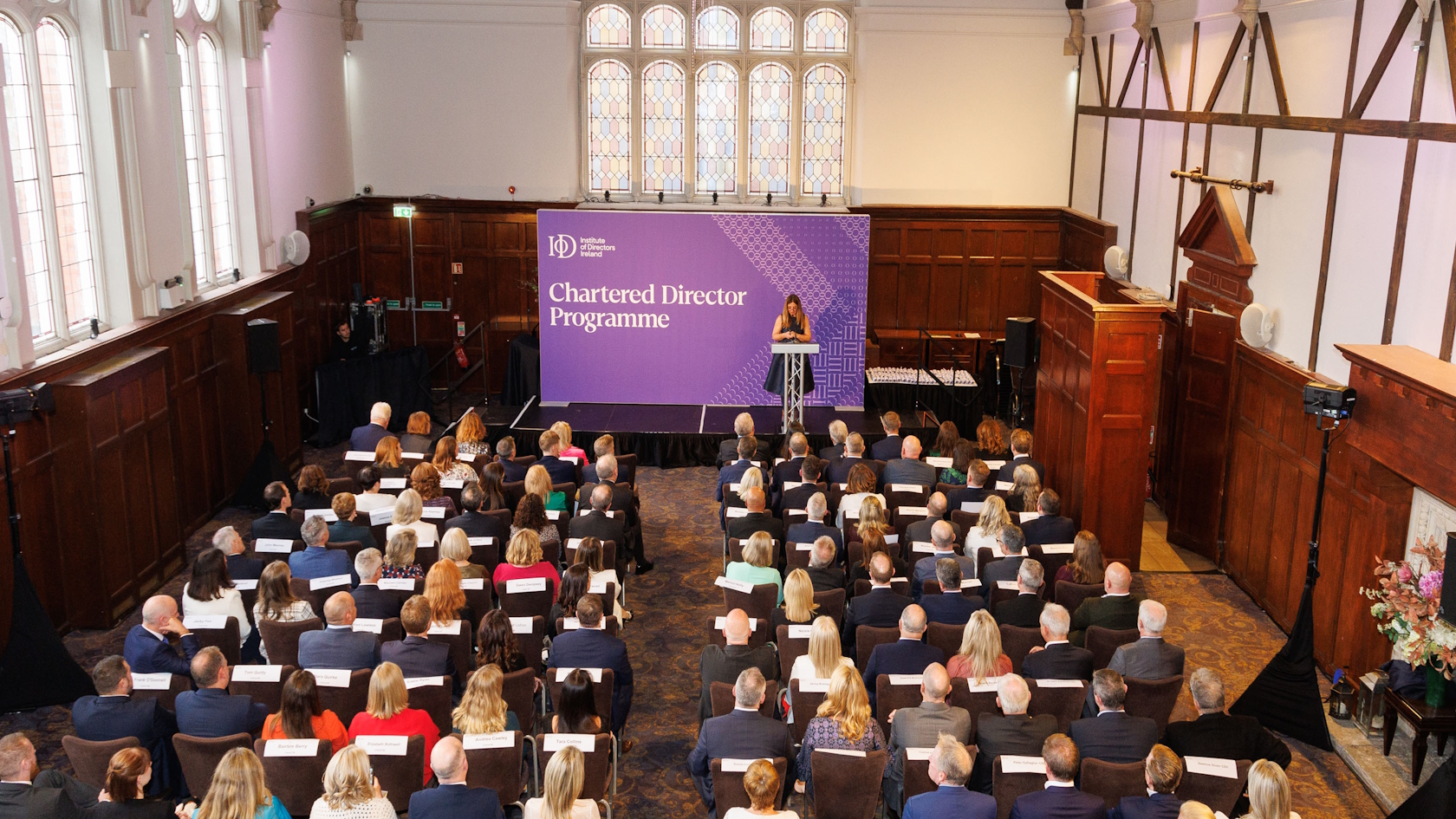
For Chartered Director, and Chair of Chapter Zero Ireland, Alan Duffy, clear communications and continuous learning are key elements to board success.
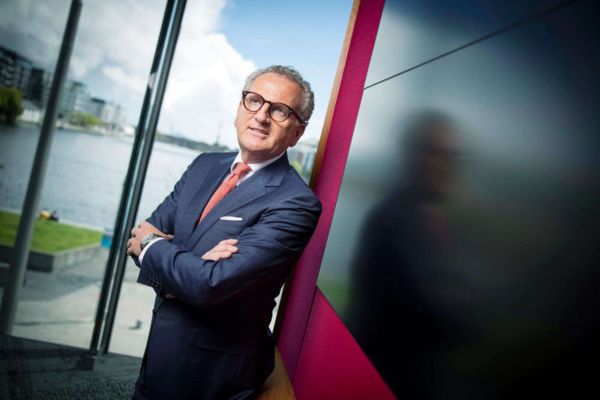
(Pictured: Alan Duffy CDir, Chair of Chapter Zero Ireland)
What doesn’t break you makes you stronger—or at least prepares you for the next shock or crisis. That’s a fair summary of Alan Duffy’s view on leadership, a style he says was forged in the crucible of adversity. The HSBC Europe managing director and head of sustainable finance believes that harsh conditions can often provide fertile ground for opportunity.
Forged in adversity: A leadership philosophy
Having spent a number of years working for European banks, Duffy was head-hunted in 2006 to establish HSBC’s corporate banking operation in Ireland. “The timing of my joining HSBC in Ireland and the collapse of the global financial system and the Irish banking sector were very close,” he recalled. “But that actually proved to be a great time to build relationships. We were able to support our clients thanks to a very strong balance sheet and brand. We didn’t need any government support, and that allowed us to establish a strong and lasting presence in Ireland.”
He went on to lead HSBC’s corporate banking in Ireland before becoming CEO. “We built Ireland’s profile as a great place to do business within the HSBC international network,” he says. “We had a fantastic team—nimble, responsive, and incredibly high calibre. It was a very dynamic time, and I really enjoyed my years at the helm.”
In 2022, he transitioned to his current role in sustainable finance, building on years of hands-on experience with academic credentials. “I’ve always been passionate about learning and development,” he says. “Your ability to grow and develop as a leader depends on staying intellectually curious. You owe it to yourself, your clients, and your organisation to keep evolving.”
A passion for learning: Director credentials and continuous development
This passion for lifelong learning led him to complete the Institute of Directors (IoD) Chartered Director Programme. “I was already sitting on several boards and wanted to ensure I was up to date with my duties as a director,” he said. “The programme is excellent - there’s no better qualification to have. In today’s fast-evolving environment, where the demands on directors continue to expand, the IoD’s Chartered Director Programme is not just a credential—it’s a practical foundation for real-world boardroom leadership.”
He also pursued further study in sustainable finance at the University of Cambridge and in sustainability leadership at Imperial College London.
The Chartered Director qualification, he says, helped broaden the soft skills essential for non-executive directors today—listening, conflict resolution, and team dynamics. “These skills have become far more important. Applying what I learned on the IoD Ireland programme made me a more rounded leader and team player.”
“IoD Ireland is more than a qualification—it’s a community of peers, a forum for learning, and a compass for modern governance.” — Alan Duffy
Climate governance: The role of a director
Duffy’s commitment to effective governance and climate leadership recently saw him take on a new role as Chair of Chapter Zero Ireland, an initiative that equips and inspires non-executive directors to lead on climate from the boardroom. “This is a critical time for boards to take ownership of the climate agenda,” he explained. “Chapter Zero Ireland provides a supportive peer community, practical resources, and events that give NEDs and chairs the knowledge and confidence to embed climate targets and transition plans into their strategy.”
For Duffy, it’s a natural extension of his commitment to sustainability and governance. “It’s about enabling boards not just to be informed, but to lead with purpose and intent.”
Governance that works: Communication, culture and challenge
He believes open, honest, and regular communication—paired with a healthy culture of challenge—is essential for effective boards. “First and foremost, relationships on a board must be built on trust. Boards should be a source of support in times of adversity. When things go wrong, and they will, no one should be running for the hills. Communication is critical—but it’s not easy to get right when boards meet only quarterly and members aren’t in the office together every day.”
Maintaining a strong communication rhythm, he notes, helps create a “no surprises” environment. “No one wants to be blindsided on a Monday morning. You have to control what you can and plan for contingencies.”
Tools such as dashboards play a role in this. “I use well-constructed, relevant dashboards that highlight pressure points and what’s coming down the line. They’re not tick-box exercises—they’re visual tools to aid understanding. I’m not a fan of massive board packs unless complexity warrants them. When you’re communicating with a diverse board, you need material that’s easy to digest.”
Robust challenge is equally important. “A board isn’t just there to rubber-stamp management plans. You need a culture where members are confident enough to challenge constructively—without descending into conflict. That environment has to be fostered.”
“Board culture matters,” he said. “IoD Ireland’s guidance, whether through its codes, workshops, or expert forums, has helped define what good looks like in Irish boardrooms today.”
Risk, resilience and realignment: Board agendas are changing
Duffy sees the role of the CEO evolving rapidly. “It’s no longer just about commercial performance. The CEO is now also the guardian of good governance. They set the tone from the top and are accountable across a wider range of issues—ESG, AI, cybersecurity, supply chains, and beyond.”
The risk landscape, too, has shifted dramatically. “The rise of GenAI-powered cyberattacks is a major new threat. It wasn’t even on the radar five years ago, but now it should be right at the top of boardroom agendas.”
He notes that board priorities have changed significantly. “Two years ago, ESG was number one. Now, in 2025, geopolitical risk leads the agenda, followed by AI, supply chain, and cyber threats. Sustainability has dropped to fifth place. That doesn’t mean it’s any less important—but it reflects how volatile and complex today’s operating environment has become.”
Boardrooms now need a broader range of expertise—from geopolitics and digital transformation to the decarbonisation agenda. “Sustainability hasn’t fallen off the agenda,” he said. “But it’s had to compete with urgent challenges like competitiveness in Europe and polarisation in the US. That doesn’t make climate action any less necessary—especially when supply chain resilience depends on it.”
At HSBC, his sustainable finance remit continues to grow. “Over the past three years, we’ve significantly expanded our offering. We’re financing green projects across energy and other sectors and helping companies decarbonise their activities.”
Advice to future leaders: Stay curious, stay connected
His advice to the next generation of board members and corporate leaders? Never stop learning. “Continuous learning has to be right at the top. Leaders have to stay current—while still delivering. IoD Ireland’s Chartered Director Programme is second to none. The Institute also runs highly relevant events, with exceptional speakers like Gary McGann, who share decades of board experience.”
“For me, IoD Ireland ticks every box. And the accessibility of other members is invaluable—you can always pick up the phone for guidance,” he added. “That peer exchange is one of the most underrated strengths of being part of the IoD network. You’re never alone in a complex decision.”
He concludes by returning to the lessons of adversity. “The skills you develop in difficult times will carry you through the good and the bad. The CEO role may be increasingly technical—but don’t forget: it’s still a people business. Soft skills, reliability, and how you show up as a leader—that’s what counts. You have to be seen to deliver.”
This article was orginally posted by the Business Post.
Chartered Director Programme
Our Programme offers a transformative educational experience designed to develop exceptional directors equipped to face the challenges of a globalised business environment. Our comprehensive approach equips board members with practical, tested frameworks and tools to enhance critical leadership skills.