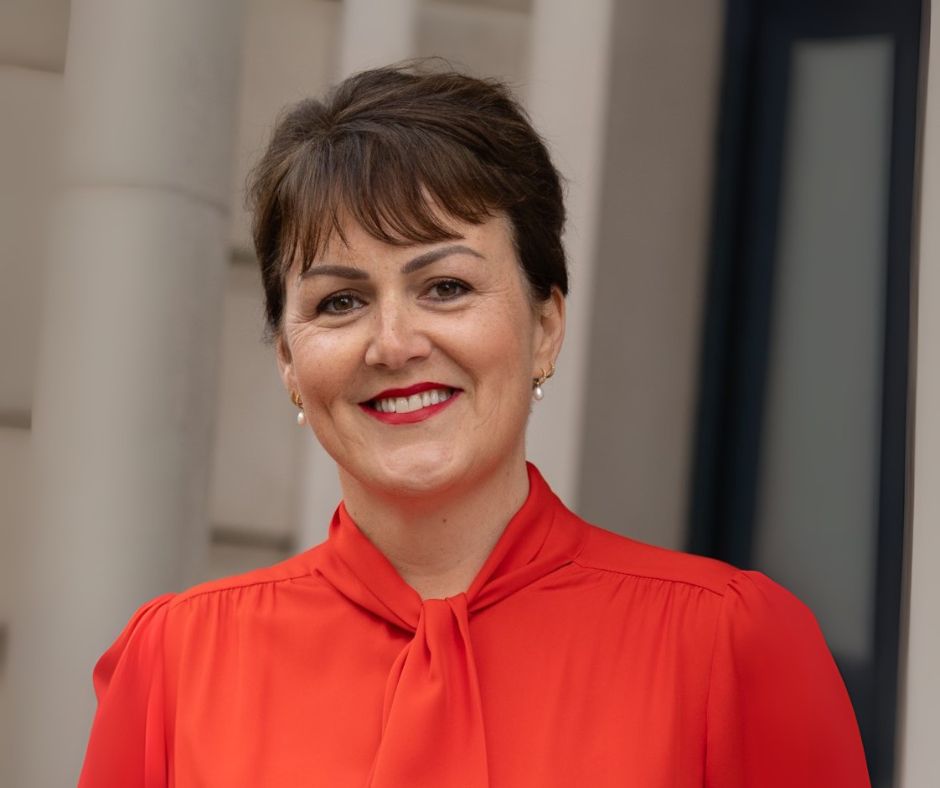
Natasha Adams
Chief Strategy and Transformation Officer, Tesco
Natasha Adams has over 25 years of experience at Tesco, including roles in HR, retail operations, and as Chief People Officer, and CEO of Tesco Ireland, and Northern Ireland. She now serves as Chief Strategy and Transformation Officer and is a Non-Executive Director (NED) at Berkeley Group plc.
You’ve spent 27 years in a variety of roles with Tesco. How are you applying that experience in your new role as Chief Strategy and Transformation Officer?
Tesco hasn’t had a dedicated Chief Strategy and Transformation Officer before. My role is to help the business transform and deliver for our customers into the future. I need to make sure we have the right people with the right skills to execute our strategy in the years ahead.
Can you tell us about your career journey with Tesco?
I started out working in a shop and progressed from there. I spent about half my career in HR and people, and the other half in retail operations. I was Chief People Officer during Covid. After four years in that role, our Group Chief Executive Officer Ken Murphy asked me if I wanted to be a CEO. I became CEO of Tesco Ireland and Northern Ireland in 2022 and moved into the Group Strategy and Transformation role in June of this year.
Your new role is UK-based. How do you balance that with life in Ireland?
I have two daughters in school here and we will stay living in Dublin. I left Kerry in the early 80s and grew up and was educated in the UK, but the family home is still in Kerry. That’s the gravitational centre of the family. August is always fun, and it feels like hundreds of family members arrive home every year.
Retail is a fast-changing business. How do you manage today’s pressures while planning for tomorrow?
Planning for the future is challenging in any business, but it’s especially so in the highly changeable retail environment. The retail business is very day to day. The temperature goes up two degrees and customer habits and behaviours change. It’s a very dynamic and seasonal business. As we think about the day-to-day business and how to respond to outside forces, we also have to think about the future and how we can continue delivering for our customers across our markets.
Innovation is also part of your remit. What does that mean for Tesco?
Innovation is an area that’s really exciting for us. It’s about understanding how the entire business needs to evolve and how we can deliver for customers and win with them. It’s really important to be customer-led. We need to stitch everything together across all the touchpoints of the brand to offer a seamless experience to our customers.
How do you meet the needs of such a diverse customer base?
We have a very broad demographic of customers, and they interact with us in different ways. For some it’s the traditional way, they want to interact physically by going to a shop. Others want the flexibility of going online and getting their shopping today, tomorrow, or even in an hour with the Whoosh service where that is available. Then there is Tesco Mobile, and, in the UK, Tesco Bank, which is a joint partnership with Barclays. These are all parts of the omnichannel approach we bring to our customers.
And what about balancing online and physical retail?
Online retailing is an incredible service for customers, and my job is to get the balance right between traditional shopping in store and transformation through the online and digital experience. That’s not easy. We have to make sure our digital strategy is the right one for our customers. And when we look to the future, we have to keep an eye on what’s happening outside today but make sure we don’t get sidetracked. Tesco has evolved over the years and will continue to do so. It’s all about balance, and it’s not all about technology.
Beyond Tesco, what drew you to join the board of Berkeley Group plc?
Towards the end of my time as Chief People Officer I began thinking about what I wanted to do next. I was conscious that I had worked for the same organisation for most of my adult life and I wanted to spend some time outside of that world. I wanted to learn from being on the board of a company in a different industry and to work with people with different experiences to my own. Housing was something I was always interested in, and through contact with the CEO of Berkeley Group I was offered a seat on the board. I’m currently Chair of the Remuneration Committee.
How has that non-executive experience influenced you?
It has been amazing in a number of ways. I grew up in a business surrounded by incredibly capable people and with lots of great role models. It was great to work with another CEO in a completely different industry as I was learning to be a CEO myself, and it gave me a bit of a mental stretch. Learning from the different perspectives of other board members has been invaluable.
In the early days I was in learning mode. When I wanted to input or challenge, I wanted to ensure I was coming from a position of knowledge. I spent time walking sites, meeting people, talking to experts in the business to get up to speed. I thought carefully about how I could help the business through thinking about things in a different way. I wanted to bring my experience to bear in a helpful way. I’ve been on the board for over three years now, and every day is still a school day.
What makes a board truly effective, in your view?
It is important that board members spend time in the business. I can often get as much information from talking to someone running a sales office on a site as I do from talking to the CFO. And boards also need a safe environment where members can admit when they don’t understand an issue.
How do you manage the discipline of being a non-executive versus an executive?
You have to take off your executive head and put on your non-executive director (NED) head. The urge to jump in at times is huge, it’s almost a physical reaction. I literally have to sit on my hands at times. It takes deliberate thinking through the issue to ensure I can add value in the right way.
What advice would you give executives considering their first NED role?
Don’t be in a rush to find your first NED role. Think about it for the long term. Ask yourself how much you can contribute and what you can learn from the experience. Do your homework and spend some time talking to experienced NEDs about it. Do due diligence on the first one and make sure it’s the right fit for you.
Finally, how has IoD Ireland supported you on this journey?
At times being an NED can feel quite lonely. IoD Ireland not only provides education and training but also the opportunity to be part of a community of directors, which is really important. It gives you the chance to talk to people who’ve been through similar situations, to share best practice, and to keep your thinking fresh. NED roles have their ups and downs, and IoD Ireland gives you the support of a community for the downs as well as the ups. I recommend membership wholeheartedly to anyone considering becoming an NED in the future.