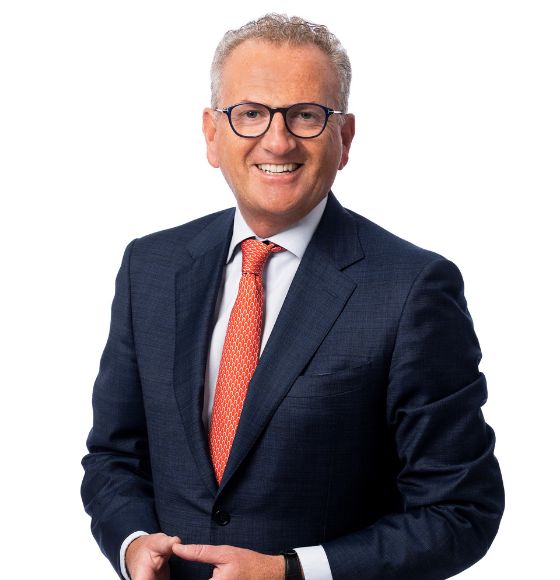
Alan Duffy CDir
HSBC Europe’s Managing Director, Head of Sustainable Finance, Chair of Chapter Zero
Alan brings decades of boardroom leadership and financial expertise to his current roles.
Your leadership style has been described as forged in adversity. How has that shaped your approach?
Absolutely. I joined HSBC Ireland just before the global financial crisis—a period of huge disruption, but also immense opportunity. We had a strong balance sheet, and while others were retreating, we supported clients and built long-term relationships. Tough times test resilience, but they also sharpen your ability to adapt and lead with intent.
What drove you to pursue the Chartered Director Programme with IoD Ireland?
I was already serving on several boards and felt a deep responsibility to ensure I was fully up to date on my duties. The IoD Chartered Director Programme is outstanding—it’s not just a qualification; it’s a practical foundation for real-world governance. It helped me grow as a director and brought a broader perspective on soft skills like listening, team dynamics, and constructive challenge.
You’ve recently taken on the role of Chair of Chapter Zero Ireland. Why is climate leadership so important at board level?
Boards have a critical role in shaping the climate transition. Chapter Zero Ireland equips non-executive directors with the confidence and knowledge to embed climate into strategy—not as a compliance issue, but as a leadership imperative. It’s about enabling boards to act with purpose and urgency.
In your view, what makes for an effective board culture?
Trust, transparency, and challenge. Communication is key, especially when boards meet infrequently. You need regular, honest engagement to avoid surprises and foster alignment. Dashboards are useful when done right—not just as reporting tools, but as visual aids that highlight risks and opportunities. And every board needs a culture where members feel empowered to challenge constructively.
How do you see the CEO role evolving in today’s boardrooms?
The CEO is now much more than a commercial lead—they're also the guardian of good governance. They’re accountable for everything from ESG to AI and cybersecurity. That’s a huge shift. Today’s CEOs need a broader skillset and the ability to lead across increasingly complex and interconnected issues.
Speaking of complexity, how have board agendas changed in recent years?
Dramatically. In 2023, ESG topped the list. In 2025, it’s geopolitical risk, followed by AI, cyber threats, and supply chain resilience. Sustainability is still essential, but it now competes with urgent global challenges. Boards need a wider range of expertise to keep pace—geopolitics, tech, digital transformation, and more.
What advice do you have for aspiring directors and future board leaders?
Stay curious. Stay connected. Never stop learning. The IoD Chartered Director Programme is second to none. But beyond the formal education, what makes the IoD Ireland network special is the access to your peers—you can pick up the phone, get advice, share experience. That community is an incredible resource.
And finally, what’s the one leadership trait you think is often overlooked?
Reliability. People still matter most. You can have all the technical skills in the world, but how you show up—in good times and bad—defines you as a leader. The soft skills are often the hardest to master, but they’re what people remember. That, and delivering consistently.