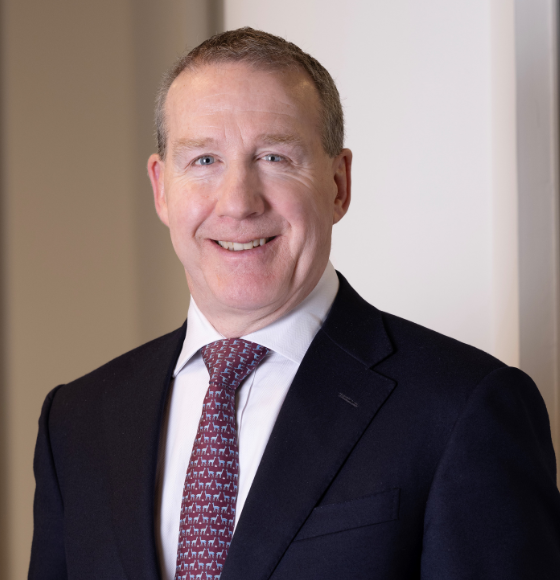
Paul Lynch
Experienced Independent Non-Executive Director & Chair
Paul Lynch is a highly experienced Chair and Independent Non-Executive Director, currently serving on a number of leading Irish boards across the retail, healthcare and industrial sectors. His career has encompassed executive leadership, corporate finance and governance roles.
Paul Lynch is a highly experienced Chair and Independent Non-Executive Director, currently serving on a number of leading Irish boards across the retail, healthcare and industrial sectors. Drawing on a career that has included executive leadership, corporate finance and governance roles, Paul shares his perspectives on the role of the INED and the value of effective board leadership.
Tell us a little about your current board and advisory portfolio.
Today, I serve as Non-Executive Chairman of Mincon Group plc, Shaws Department Stores, Aubren Limited and McKeon Group. I am also Senior Independent Director of Mincon Group plc and sit on the board of St Vincent’s University Hospital Group. Alongside these roles, I continue to advise a range of businesses on strategy, growth and development.
Your career has spanned professional services, corporate finance and executive leadership. How did that journey begin?
I qualified as a Chartered Accountant with Arthur Andersen in the mid-1980s. At the time, Ireland was going through a challenging economic period, and accounting offered both stability and a strong foundation for future career development. From there, I moved into corporate finance with Riada, managing and investing Business Expansion Scheme funds. That role exposed me to a wide range of businesses and entrepreneurs and sparked my interest in working directly within industry.
What prompted your move into executive leadership roles?
After corporate finance, I joined Heiton Group plc as Head of Corporate Development, leading acquisitions and strategic planning. I later joined the board and subsequently became CEO of Wright Windows following its acquisition. A year later I was asked to lead Heitons’ retail businesses including Atlantic Homecare. It was a steep learning curve, but it gave me invaluable experience in leading businesses, managing change and making decisions in fast-moving environments.
You held several senior executive roles before transitioning to advisory and board work. What led to that shift?
By 2012, after leading ISS Ireland through the aftermath of the GFC and restoring its financial performance, I found myself at a crossroads. I could continue pursuing full-time executive roles or move towards advisory and project-based work. I chose the latter. It allowed me to work with a variety of businesses, helping them navigate acquisitions, refinancing and strategic growth opportunities. I found that incredibly rewarding.
One of those opportunities was Applegreen. What was that experience like?
I initially joined Applegreen to lead a major refinancing project. Once that was completed, I was asked to become CFO and lead the company's IPO process. It was a fantastic experience. Applegreen was a strong business with significant ambition, and being part of its public market journey was very rewarding. Applegreen has seen fantastic growth following its IPO and while it was since taken private joining the stock market was a key step in its development
How did you build your non-executive director portfolio?
My first NED role was with Mincon Group plc. From there, other opportunities emerged through professional networks and relationships. I have never actively canvassed for board positions. Most opportunities have arisen because people knew my background and felt I could add value. When the right opportunity aligns with my experience and interests, I'm happy to get involved.
What do you find most rewarding about non-executive work?
It's the opportunity to support good people in strong businesses and help shape their strategic development. Non-executive roles allow you to step back from day-to-day operations and focus on the bigger picture. You can provide perspective, challenge constructively and help management teams stay strategically focused.
You have worked with both listed companies and privately owned businesses. How does the role differ?
The fundamentals are the same, but in smaller businesses there is often greater opportunity to act as a sounding board and mentor for CEOs and management teams. In larger organisations, governance structures tend to be more developed, while in growth businesses you may play a more hands-on role in helping the organisation navigate its next stage of development.
What importance do you place on board recruitment and governance processes?
Good governance starts with robust recruitment processes. For example, when I was appointed Chair of Shaws, I went through a comprehensive search and selection process managed by IoD Ireland. That level of rigour helps ensure alignment between the organisation's needs and the skills and experience of prospective directors. It benefits both parties and ultimately strengthens governance.
What advice would you give to executives considering a move into non-executive directorships?
First, ensure your values align with those of the organisation. Second, be honest about the value you can bring. Understand your strengths, your experience and where you can genuinely contribute. And once you join a board, remember that listening is just as important as speaking. You don't need to contribute to every discussion, make your interventions count.
Is there a golden rule for being an effective non-executive director?
Every organisation is different, but one principle applies universally: non-executive directors should not try to become executives. Your role is to provide oversight, guidance and challenge, while respecting management's responsibility for running the business. Staying in your lane is essential.
How important is ongoing director development?
It's critical. The governance landscape continues to evolve, and directors need to keep learning. I've been a member of IoD Ireland for many years and have always valued the guidance, education, events and networking opportunities available. Continuous learning is an important part of being an effective director.